
Highest Rated Events (only 193 and 304 shown) All AR FE FL

Rating:
3.0 (0=lowest, 5=highest)
Num Ratings:1
Detected by halocme, Submitted at 2019-05-29T06:29:40
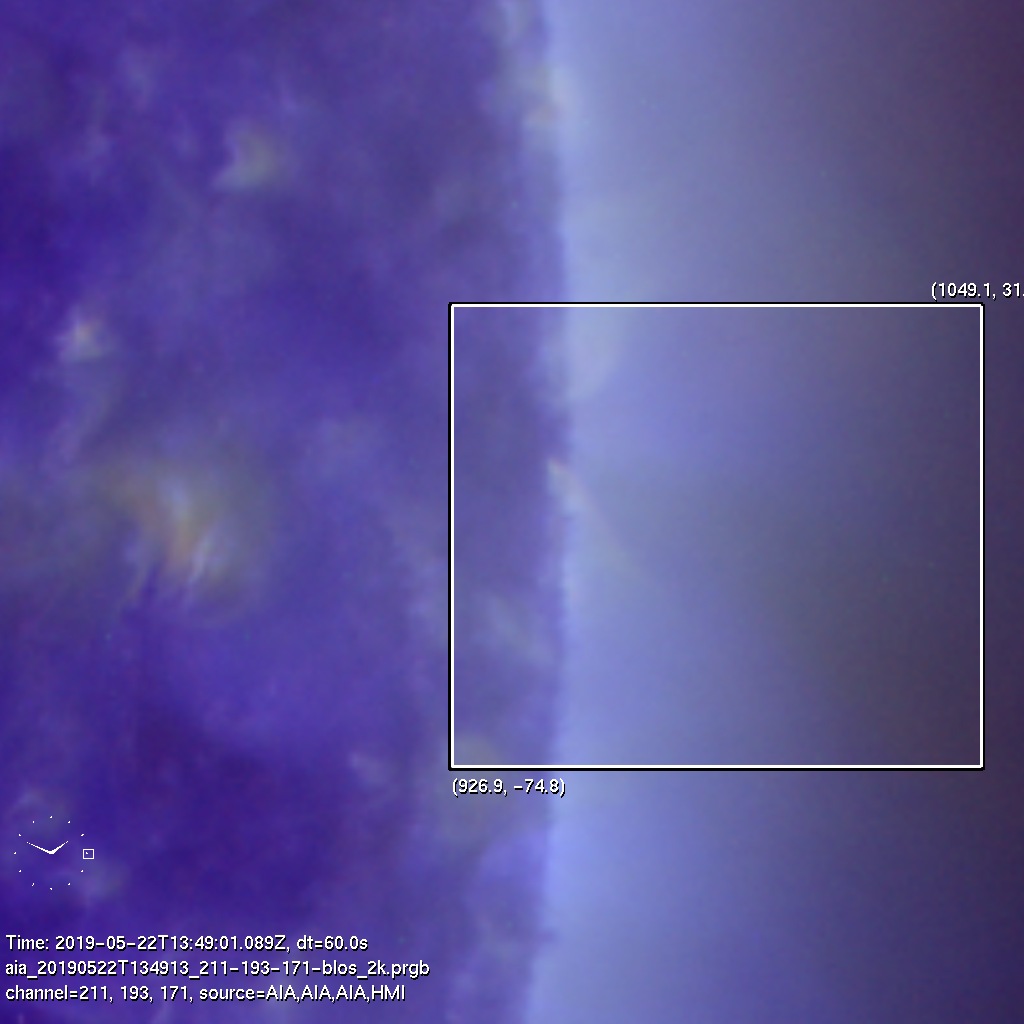
2019-05-22T12:45:01 --> 2019-05-22T14:01:01
A tiny eruption, causing the overlying structure to slightly dim.
Rating:
3.0 (0=lowest, 5=highest)
Num Ratings:1
Detected by halocme, Submitted at 2019-05-29T06:17:10
2019-05-21T06:45:01 --> 2019-05-21T09:01:01
The coronal structure overlying AR 12741 was seen to gradually open up and dim, even though eruption itself was not clearly seen. This was associated with a CME (http://spaceweather.gmu.edu/seeds/mkmovie_ql.php?cme=20190521.083607.w041.v0323.p248&frame=12).


Rating:
3.0 (0=lowest, 5=highest)
Num Ratings:1
Detected by halocme, Submitted at 2019-05-29T05:58:24
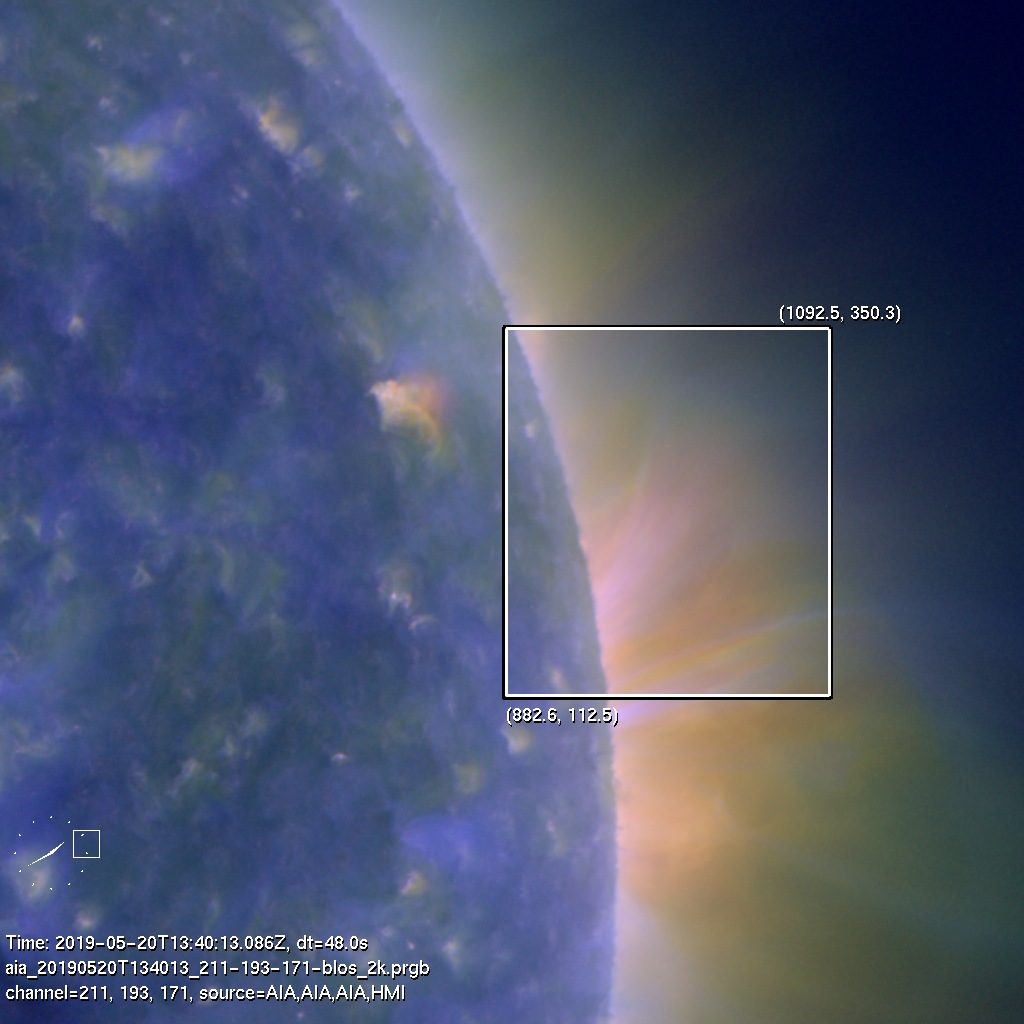
2019-05-20T13:35:25 --> 2019-05-20T14:25:25
This looked like a narrow eruption, different from a flux rope eruption (CME), but it started impulsively, causing the overlying structure to oscillate.
Rating:
3.0 (0=lowest, 5=highest)
Num Ratings:1
Detected by halocme, Submitted at 2019-05-29T05:58:24
2019-05-20T13:35:25 --> 2019-05-20T14:25:25
This looked like a narrow eruption, different from a flux rope eruption (CME), but it started impulsively, causing the overlying structure to oscillate.
Rating:
3.0 (0=lowest, 5=highest)
Num Ratings:1
Detected by halocme, Submitted at 2019-05-29T05:47:06
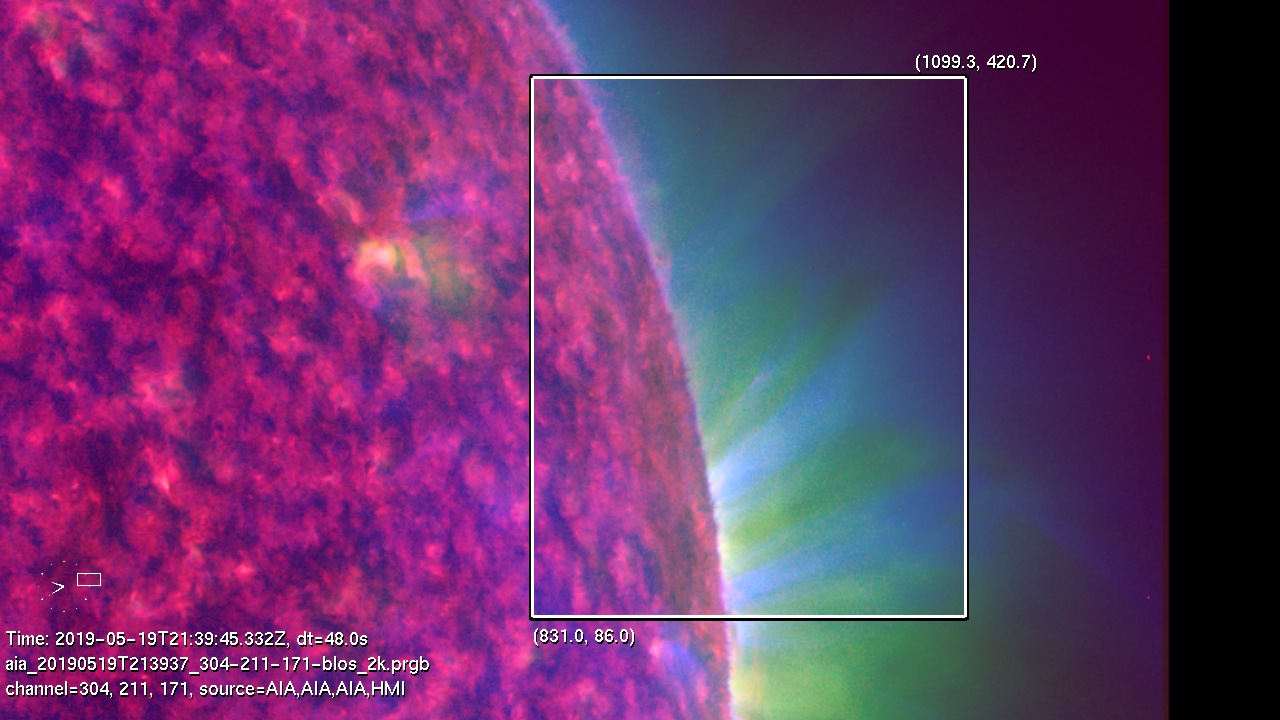
2019-05-19T21:00:33 --> 2019-05-19T21:50:33
This was probably a confined eruption, but the overlying structure was seen to be disturbed.

Rating:
3.0 (0=lowest, 5=highest)
Num Ratings:1
Detected by halocme, Submitted at 2019-05-29T05:32:29
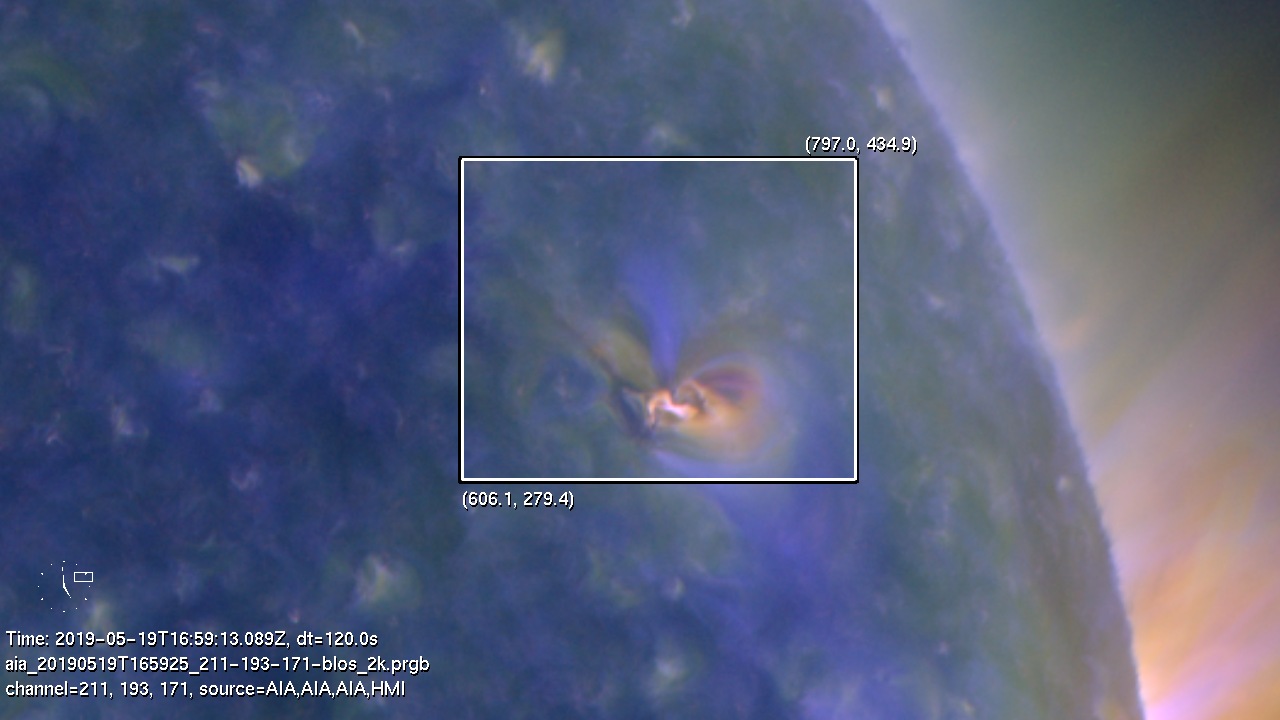
2019-05-19T15:55:13 --> 2019-05-19T17:31:13
Evem though this was on a relatively small scale, it was probably an eruption of a flux rope, seen in dark to the north of the region in projection. A surge followed the eruption, propagating in SWW.
Rating:
3.0 (0=lowest, 5=highest)
Num Ratings:1
Detected by halocme, Submitted at 2019-05-29T05:32:28
2019-05-19T15:55:13 --> 2019-05-19T17:31:13
Evem though this was on a relatively small scale, it was probably an eruption of a flux rope, seen in dark to the north of the region in projection. A surge followed the eruption, propagating in SWW.

Rating:
3.0 (0=lowest, 5=highest)
Num Ratings:1
Detected by halocme, Submitted at 2019-05-29T05:22:36
2019-05-18T15:30:01 --> 2019-05-18T16:40:49
This happened in a quiescent region. The wave propagated preferentially in the northwestern direction. No flare was seen above the ~A8 beckground level.

Rating:
3.0 (0=lowest, 5=highest)
Num Ratings:1
Detected by halocme, Submitted at 2019-05-29T05:06:21
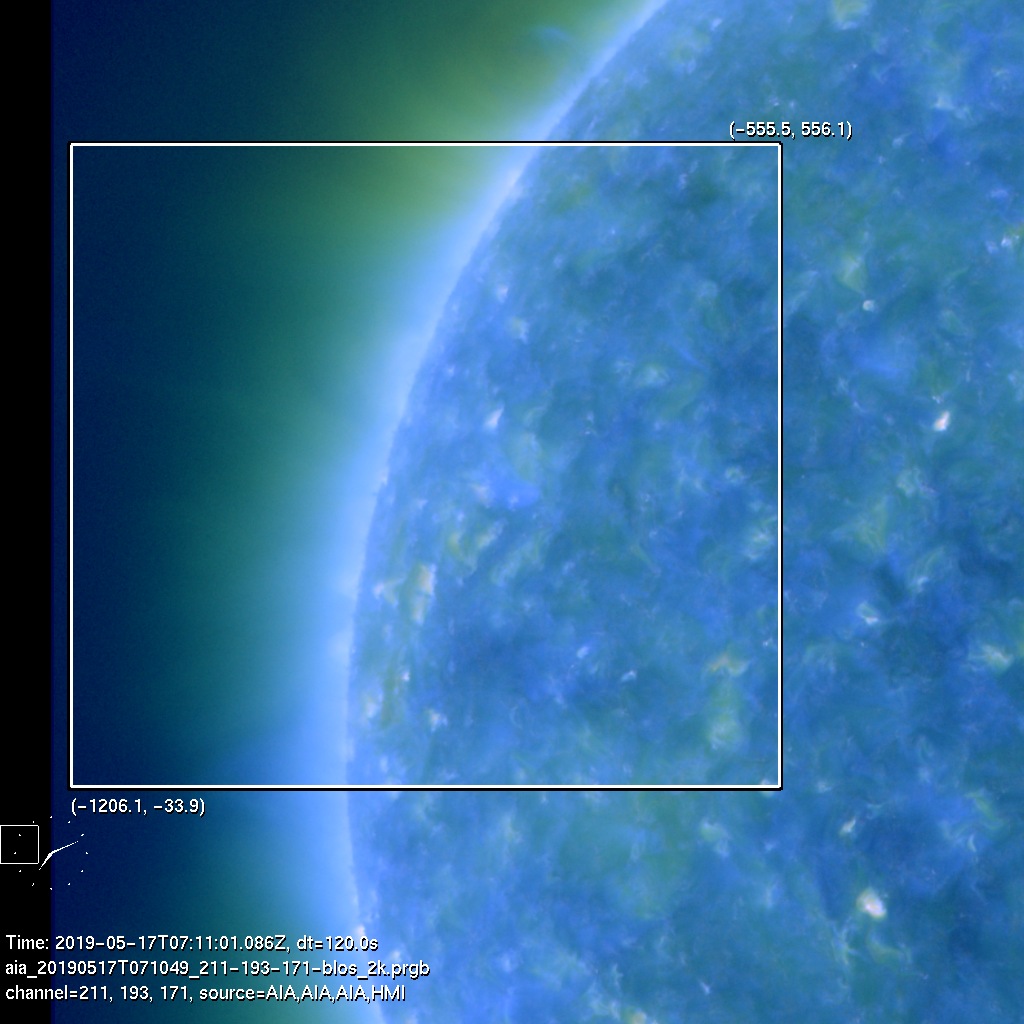
2019-05-17T06:15:01 --> 2019-05-17T07:35:01
A small filament erupted, but it had far-reaching effects high in the corona for the outflow to be visible over the limb.
Rating:
3.0 (0=lowest, 5=highest)
Num Ratings:1
Detected by gchintzo, Submitted at 2019-05-18T00:34:10
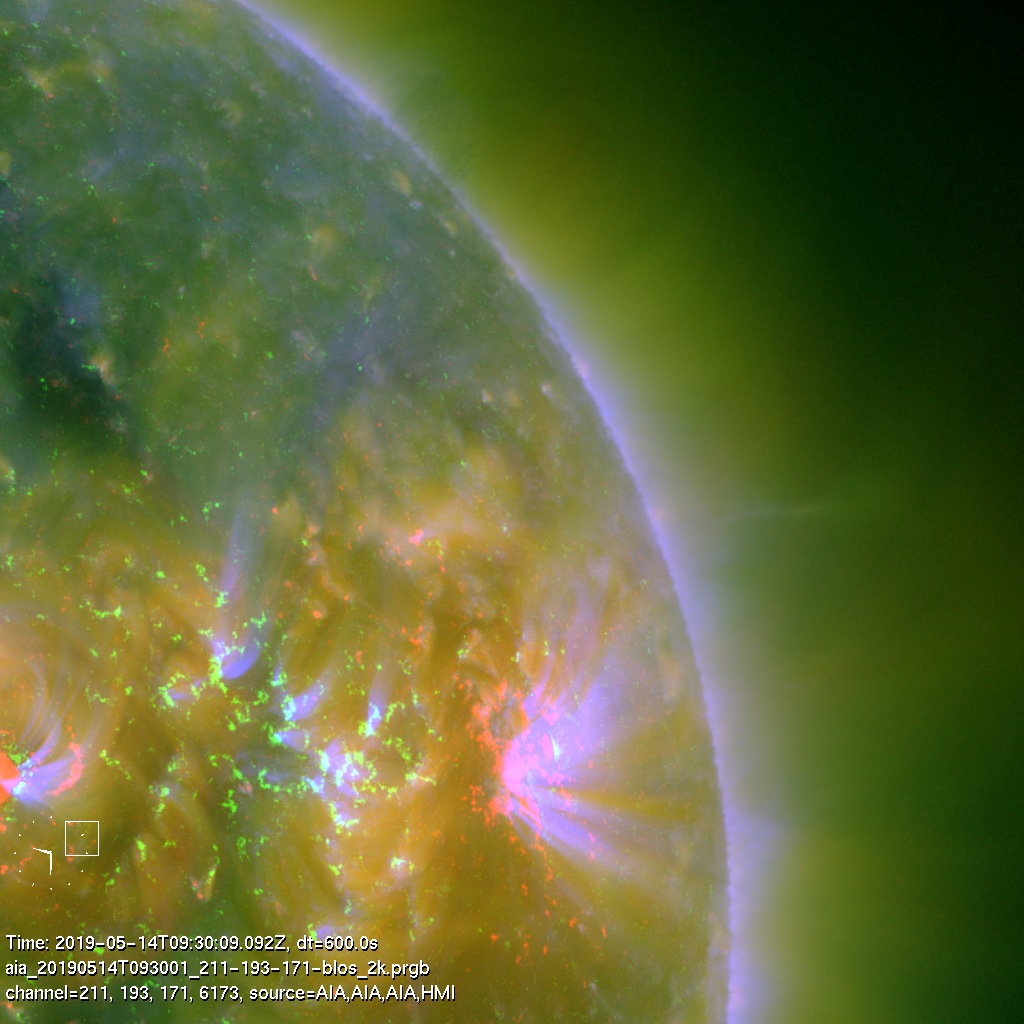
2019-05-14T06:50:09 --> 2019-05-14T20:10:09
It appears that this eruption comes from the north part of the internal PIL of AR12740.
Rating:
3.0 (0=lowest, 5=highest)
Num Ratings:1
Detected by gchintzo, Submitted at 2019-05-14T18:48:09
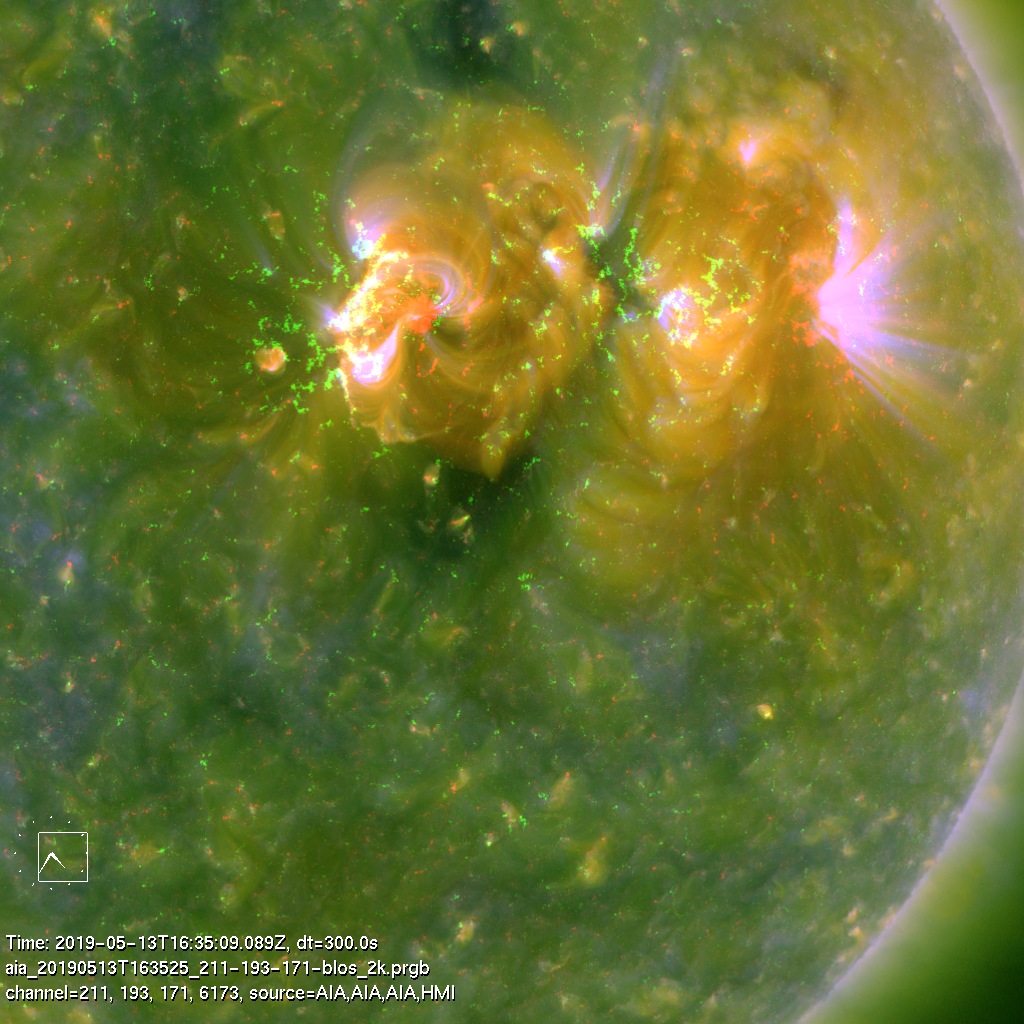
2019-05-13T13:20:09 --> 2019-05-13T19:10:09
A non radial eruption in the neutral line between AR12741 and AR12740. A CME was observed by LASCO (253 km s-1 ; http://spaceweather.gmu.edu/seeds/mkmovie_ql.php?cme=20190513.171207.w012.v0253.p096&frame=14)
Rating:
3.0 (0=lowest, 5=highest)
Num Ratings:1
Detected by gchintzo, Submitted at 2019-05-14T18:43:08
2019-05-12T17:40:09 --> 2019-05-13T00:00:09
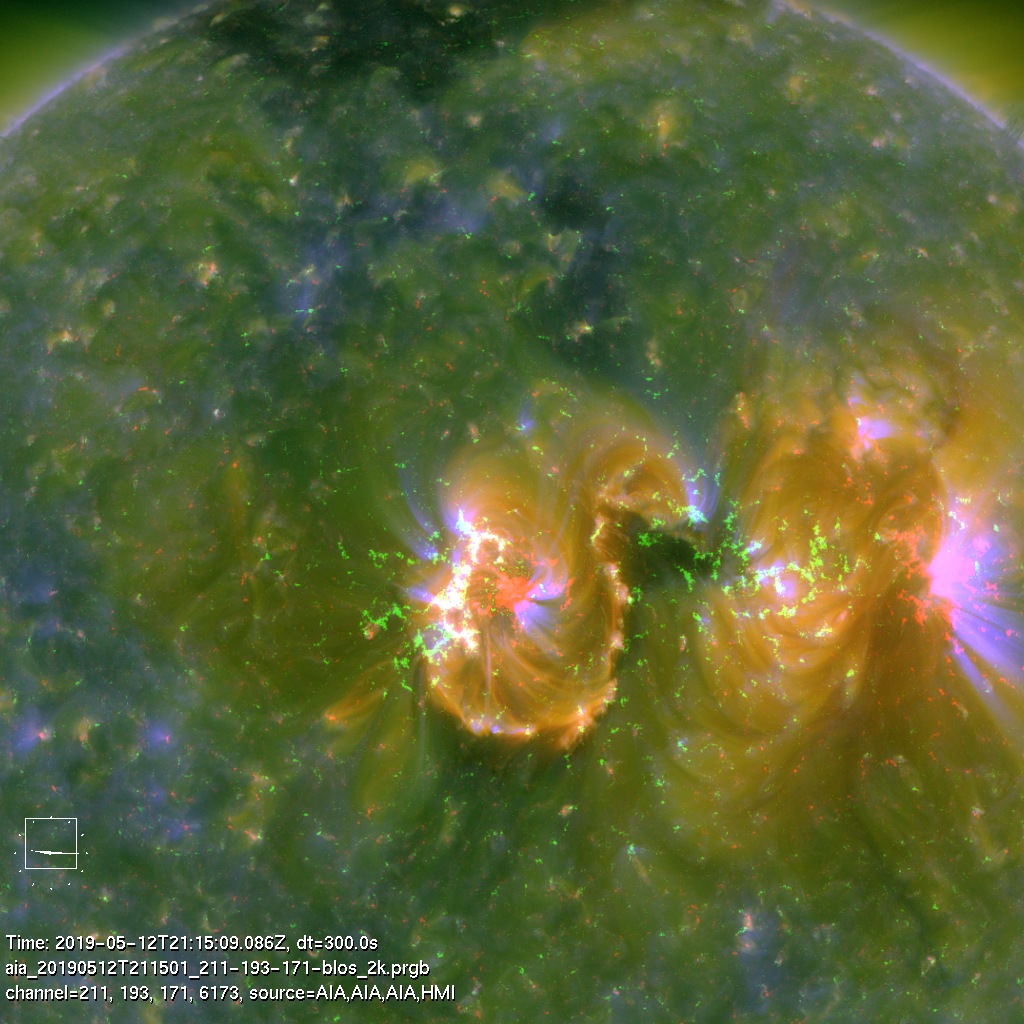
Eruption from external Polarity Inversion Line of AR12741 and AR12740. This was associated with a halo CME seen in LASCO observations (375 km s-1; http://spaceweather.gmu.edu/seeds/monthly.php?a=2019&b=05)
Rating:
3.0 (0=lowest, 5=highest)
Num Ratings:1
Detected by gchintzo, Submitted at 2019-05-14T18:35:30
2019-05-10T17:30:09 --> 2019-05-11T05:00:09
A failed eruption in the core of AR12740 and a successful eruption coming from a much wider area off the north of AR12740. A slow faint halo CME was seen in LASCO data (174 km s-1; http://spaceweather.gmu.edu/seeds/mkmovie_ql.php?cme=20190511.034807.w021.v0174.p293&frame=15)

Rating:
3.0 (0=lowest, 5=highest)
Num Ratings:1
Detected by gchintzo, Submitted at 2019-05-14T18:26:59
2019-05-09T04:00:09 --> 2019-05-09T09:30:09
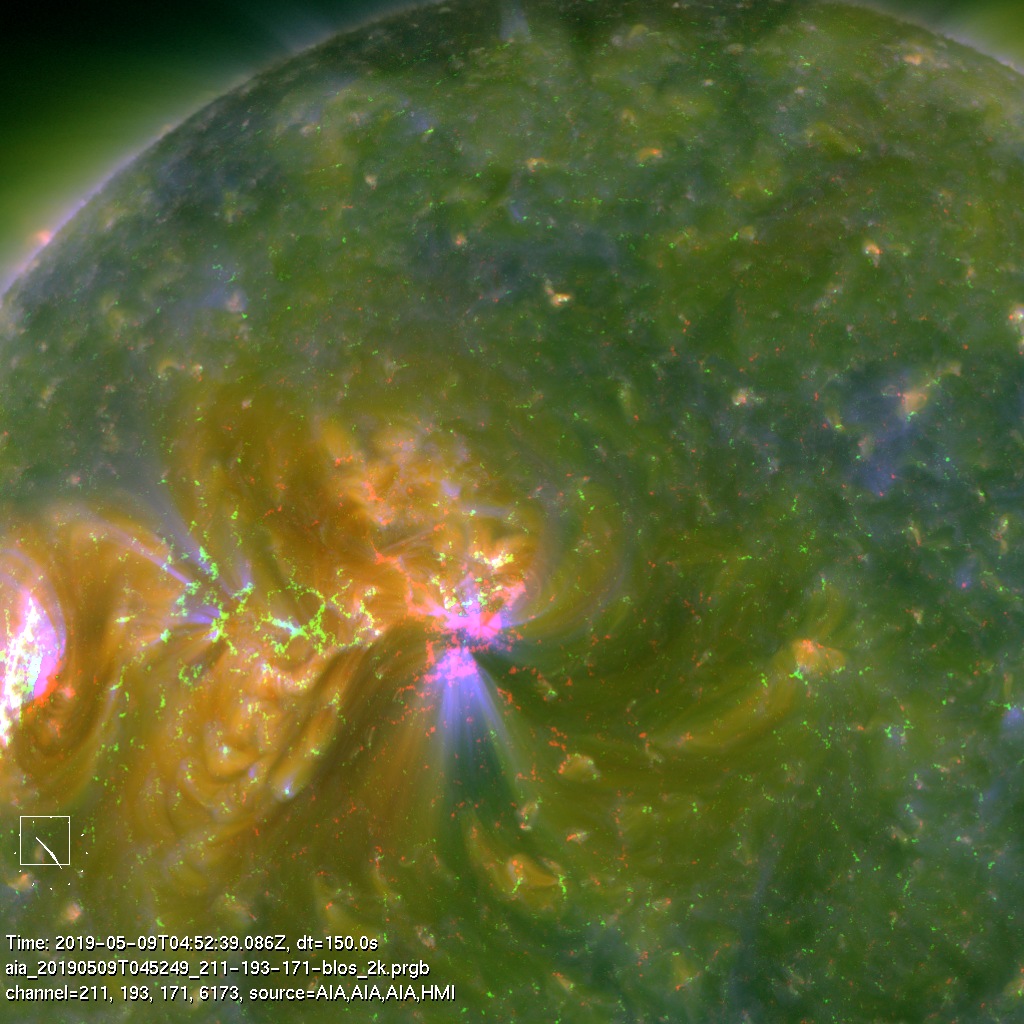
A confined eruption in the core of AR12740. A shock bubble is seen following the eruption. No ejection was seen in LASCO coronagraphic observations.
Rating:
3.0 (0=lowest, 5=highest)
Num Ratings:1
Detected by gchintzo, Submitted at 2019-05-13T18:23:58
2019-05-08T00:00:09 --> 2019-05-08T06:00:09
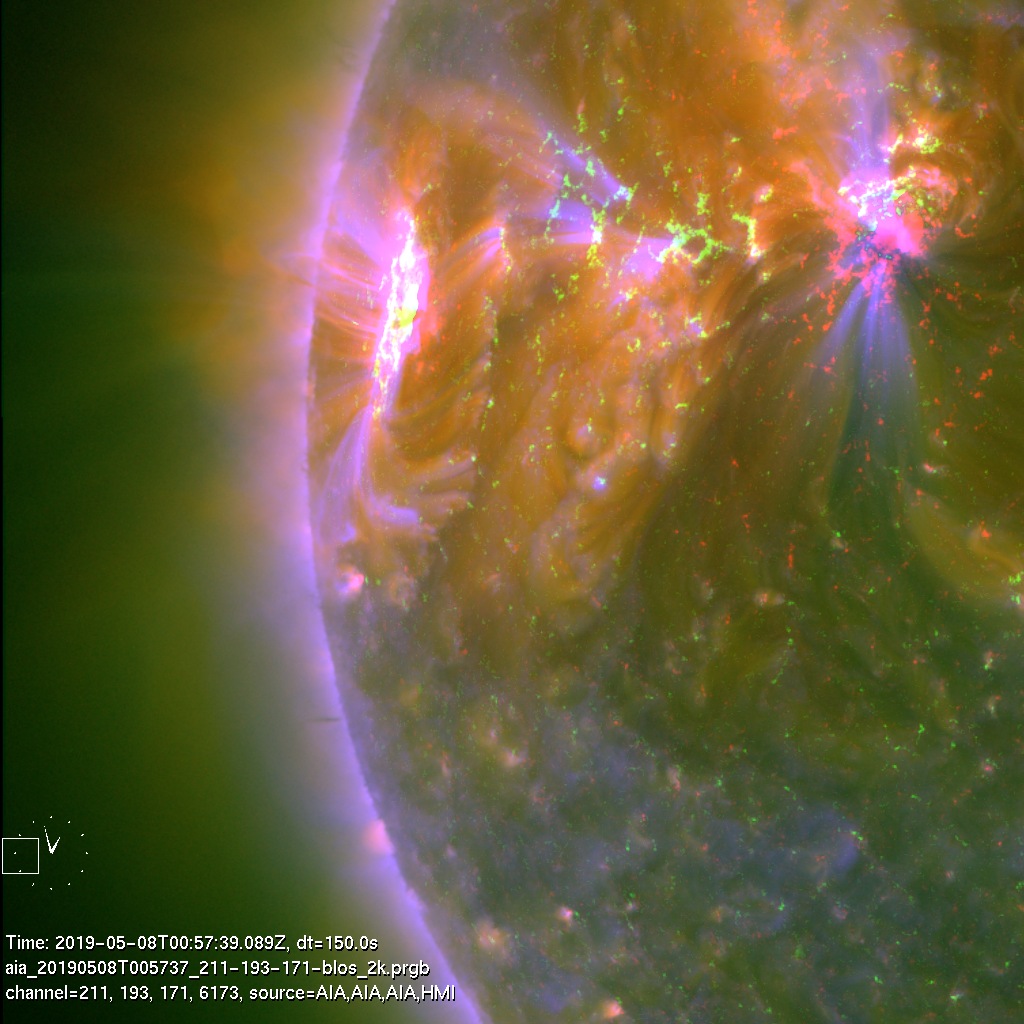
A non-radial eruption in the south part of NOAA AR12741. Plane of the sky CME speed in LASCO is 968 km s-1 (http://spaceweather.gmu.edu/seeds/mkmovie_ql.php?cme=20190508.043607.w055.v0968.p098&frame=4)
Rating:
3.0 (0=lowest, 5=highest)
Num Ratings:1
Detected by halocme, Submitted at 2019-05-05T17:50:23
2019-05-05T10:40:13 --> 2019-05-05T15:00:37
There is repeated activity of jet-like filament eruptions on the eastern side of the isolated spot of AR 12740. Two of them are energetic enough to launch EUV waves toward northwest. They are also seen as short-duration B-class GOES flares (B7.5 and B9.8).

Rating:
3.0 (0=lowest, 5=highest)
Num Ratings:1
Detected by halocme, Submitted at 2019-05-05T17:50:23
2019-05-05T10:40:13 --> 2019-05-05T15:00:37
There is repeated activity of jet-like filament eruptions on the eastern side of the isolated spot of AR 12740. Two of them are energetic enough to launch EUV waves toward northwest. They are also seen as short-duration B-class GOES flares (B7.5 and B9.8).
Rating:
3.0 (0=lowest, 5=highest)
Num Ratings:1
Detected by halocme, Submitted at 2019-04-29T23:34:54
2019-04-22T02:30:01 --> 2019-04-22T04:00:01
This eruption was initially strong in the sense that closed loops oscillated at the passage of a shock wave. But the eruption was more radial than lateral and the coronal wave was negligible. This event became the CME as seen in http://spaceweather.gmu.edu/seeds/mkmovie_ql.php?cme=20190422.032407.w036.v0318.p275&frame=8.

Rating:
3.0 (0=lowest, 5=highest)
Num Ratings:1
Detected by halocme, Submitted at 2019-04-29T23:34:54
2019-04-22T02:30:01 --> 2019-04-22T04:00:01
This eruption was initially strong in the sense that closed loops oscillated at the passage of a shock wave. But the eruption was more radial than lateral and the coronal wave was negligible. This event became the CME as seen in http://spaceweather.gmu.edu/seeds/mkmovie_ql.php?cme=20190422.032407.w036.v0318.p275&frame=8.
Rating:
3.0 (0=lowest, 5=highest)
Num Ratings:1
Detected by halocme, Submitted at 2019-04-29T22:50:15
2019-04-21T03:15:01 --> 2019-04-21T04:00:37
Like the previous two cases, the eruption was more lateral than radial. This one shows both the driver and front. Also note the clockwise rolling motions in the driver.
