
Highest Rated Events (only 193 and 304 shown) All AR FE FL

Rating:
3.0 (0=lowest, 5=highest)
Num Ratings:1
Detected by halocme, Submitted at 2014-09-26T04:50:03
2014-09-19T21:40:11 --> 2014-09-19T23:30:11
This is a jet-like ejection dominated by mateial much cooler than the corona. It may not be difficult to the changes of underlying magnetic field (emergence or cancellation) before and after the event.


Rating:
3.0 (0=lowest, 5=highest)
Num Ratings:1
Detected by halocme, Submitted at 2014-09-26T04:39:20
2014-09-19T17:30:35 --> 2014-09-19T19:30:35
This filament looks relatively simple and well-defined. The apparent counteclockwise rotation is also seen in the CME internal structure.


Rating:
3.0 (0=lowest, 5=highest)
Num Ratings:1
Detected by halocme, Submitted at 2014-09-26T04:39:19
2014-09-19T17:30:35 --> 2014-09-19T19:30:35
This filament looks relatively simple and well-defined. The apparent counteclockwise rotation is also seen in the CME internal structure.

Rating:
3.0 (0=lowest, 5=highest)
Num Ratings:1
Detected by halocme, Submitted at 2014-09-26T04:39:17
2014-09-19T17:30:35 --> 2014-09-19T19:30:35
This filament looks relatively simple and well-defined. The apparent counteclockwise rotation is also seen in the CME internal structure.
Rating:
3.0 (0=lowest, 5=highest)
Num Ratings:1
Detected by halocme, Submitted at 2014-09-26T04:27:18
2014-09-19T17:10:11 --> 2014-09-19T18:30:11
Loops are seen to oscillate as the eruption traversed them. This may be a wave rather than a mass motion.


Rating:
3.0 (0=lowest, 5=highest)
Num Ratings:1
Detected by halocme, Submitted at 2014-09-26T04:27:16
2014-09-19T17:10:11 --> 2014-09-19T18:30:11
Loops are seen to oscillate as the eruption traversed them. This may be a wave rather than a mass motion.
Rating:
3.0 (0=lowest, 5=highest)
Num Ratings:1
Detected by halocme, Submitted at 2014-09-26T04:20:53
2014-09-19T08:10:11 --> 2014-09-19T12:40:11
This filament gradually got activated and finally erupted, although only partially or in a restrained manner. Spreading flare ribbons and post eruption loops are seen, but the coronagraphic presence of this event is minimal, probably a short-lived wave up to 3-4 Rsun.


Rating:
3.0 (0=lowest, 5=highest)
Num Ratings:1
Detected by halocme, Submitted at 2014-09-26T04:20:52
2014-09-19T08:10:11 --> 2014-09-19T12:40:11
This filament gradually got activated and finally erupted, although only partially or in a restrained manner. Spreading flare ribbons and post eruption loops are seen, but the coronagraphic presence of this event is minimal, probably a short-lived wave up to 3-4 Rsun.
Rating:
3.0 (0=lowest, 5=highest)
Num Ratings:1
Detected by anny, Submitted at 2014-09-17T02:40:33
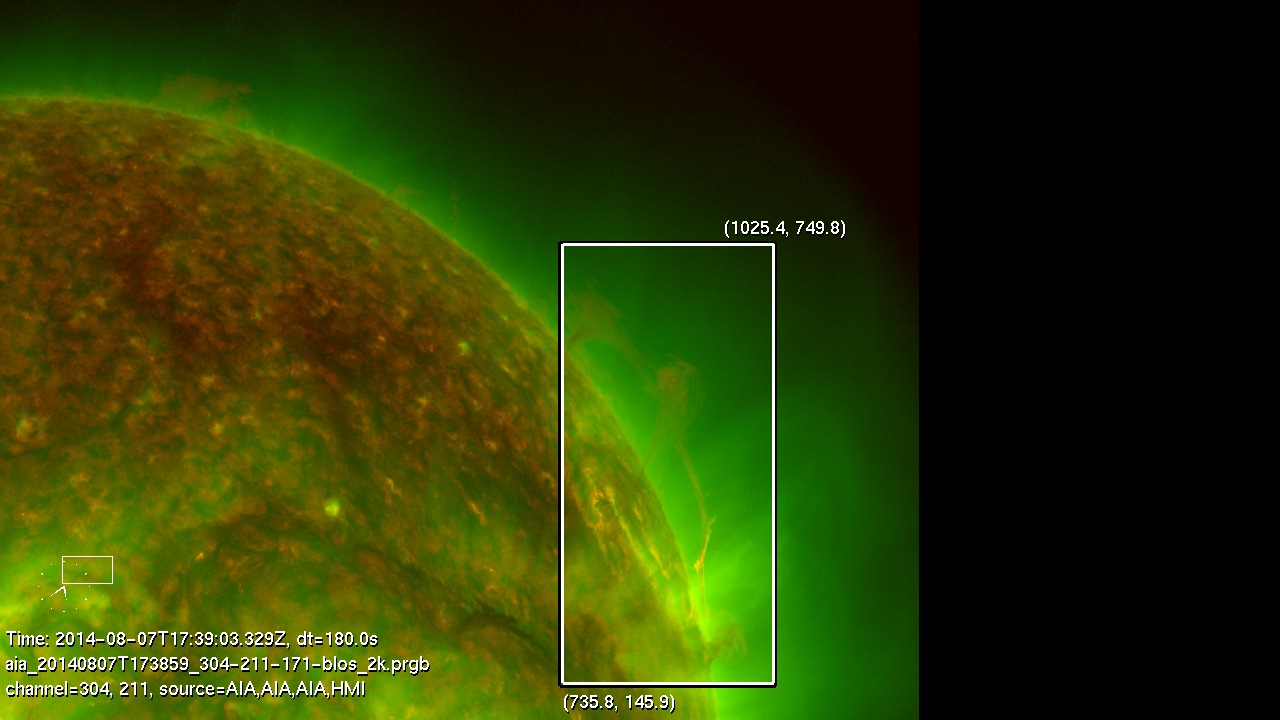
2014-08-07T16:09:03 --> 2014-08-07T22:00:03
The filament takes off, kinks and slowly disappears; hence, from 304A it is hard to tell whether it has erupted. However, a cavity eruption is apparent in 211A to the N of the filament site.
Rating:
3.0 (0=lowest, 5=highest)
Num Ratings:1
Detected by halocme, Submitted at 2014-09-14T05:13:50
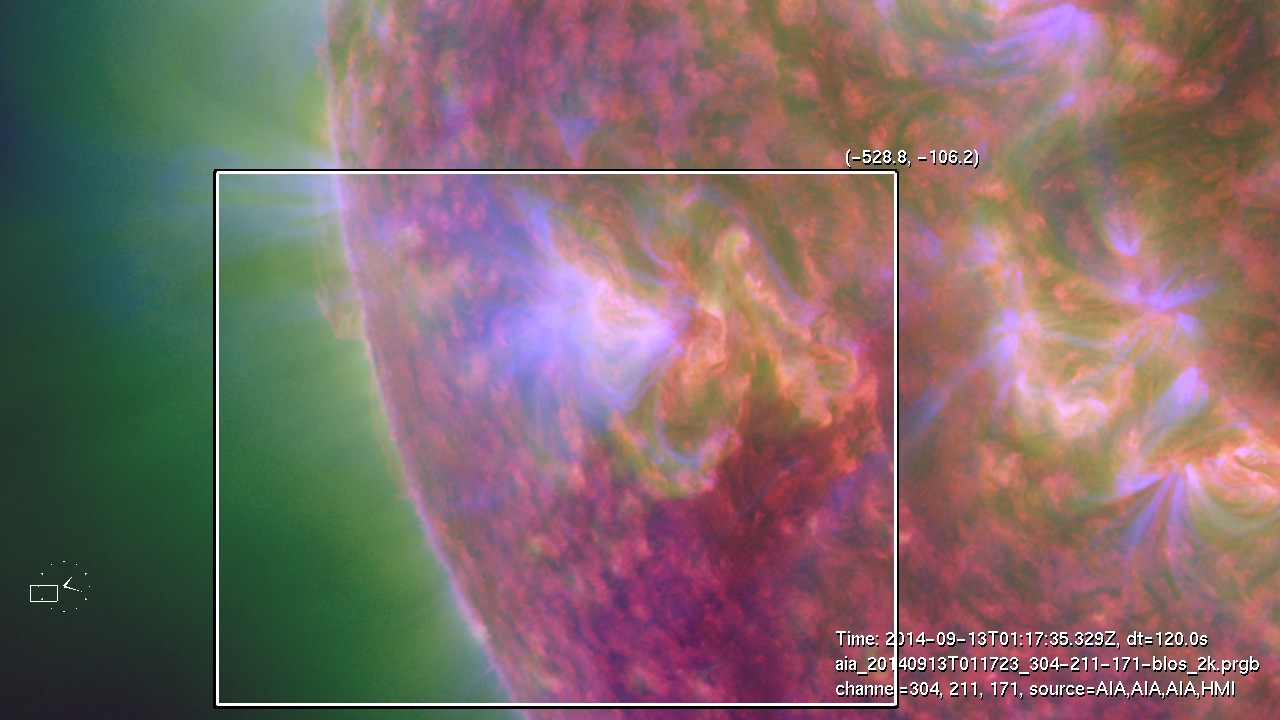
2014-09-12T23:15:35 --> 2014-09-13T01:21:35
This eruption produced flare ribbons, but it did not appear to make it to the interplanetary space as the filament was seen to fall back, especially in the 304 A channel. LASCO observed a bright and fast, but narrow CME.
Rating:
3.0 (0=lowest, 5=highest)
Num Ratings:1
Detected by halocme, Submitted at 2014-09-14T05:13:49
2014-09-12T23:15:35 --> 2014-09-13T01:21:35
This eruption produced flare ribbons, but it did not appear to make it to the interplanetary space as the filament was seen to fall back, especially in the 304 A channel. LASCO observed a bright and fast, but narrow CME.
Rating:
3.0 (0=lowest, 5=highest)
Num Ratings:1
Detected by halocme, Submitted at 2014-09-14T04:56:54
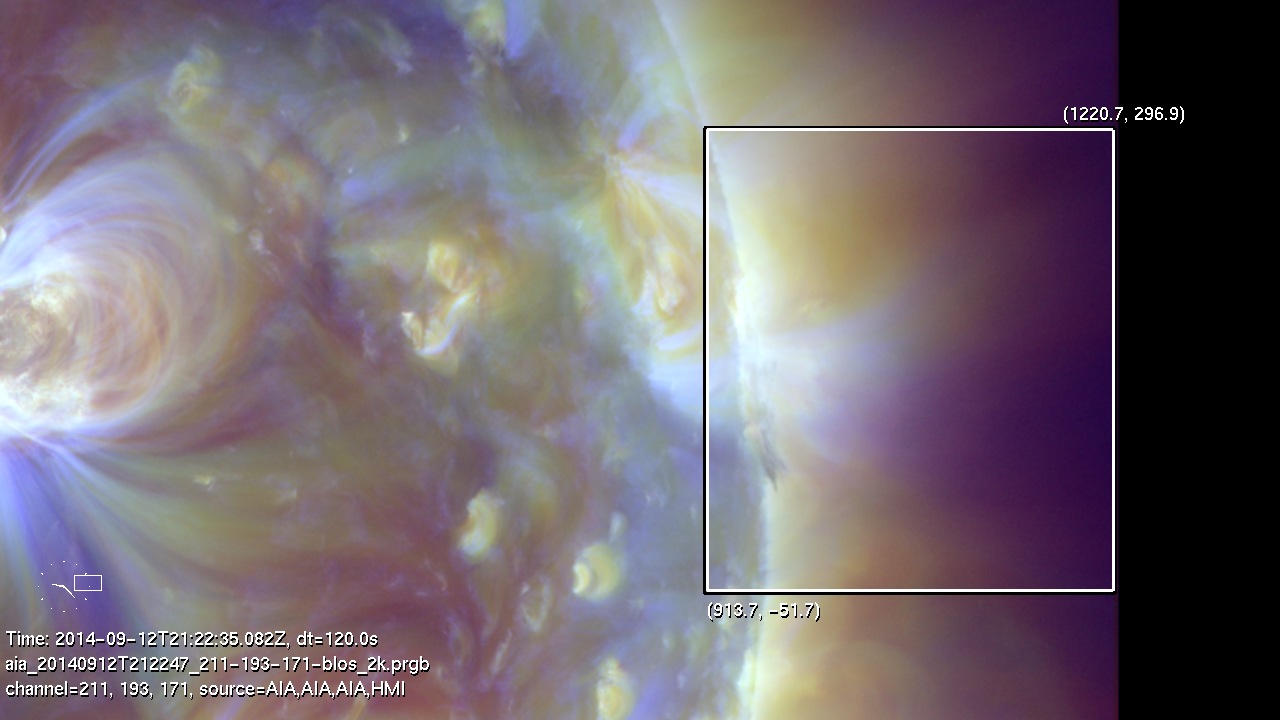
2014-09-12T21:00:35 --> 2014-09-12T22:50:35
The eruption seems to be preceded by lateral motions of a filament in AR 12162. No GOES flare, but a relatively bright CME.
Rating:
3.0 (0=lowest, 5=highest)
Num Ratings:1
Detected by halocme, Submitted at 2014-09-14T04:48:13
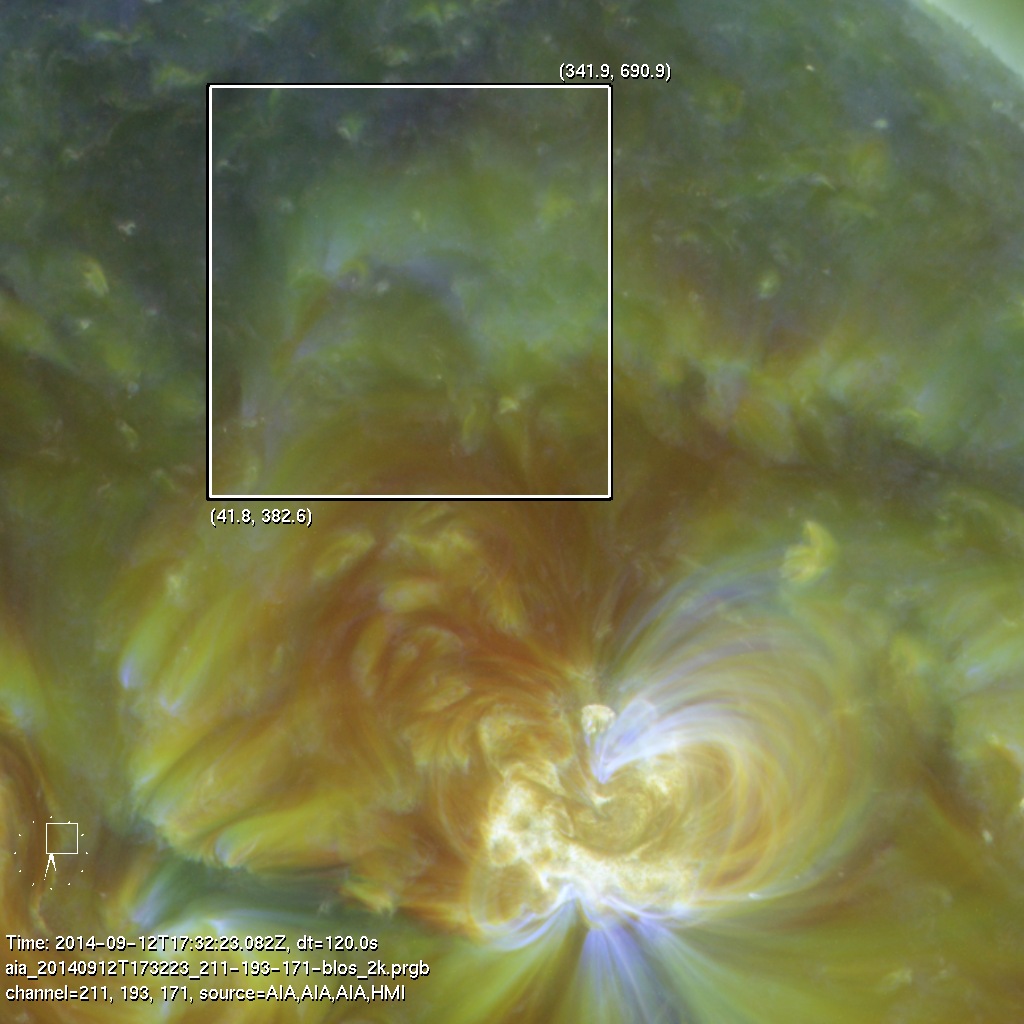
2014-09-12T16:20:23 --> 2014-09-12T17:50:23
A similar pattern to the last two examples - an eruption from the small region in AR 12158 disturbing a large area to the north. This one is much smaller and the disturbed area seems to be restricted to northeast.
Rating:
3.0 (0=lowest, 5=highest)
Num Ratings:1
Detected by halocme, Submitted at 2014-09-14T04:44:04
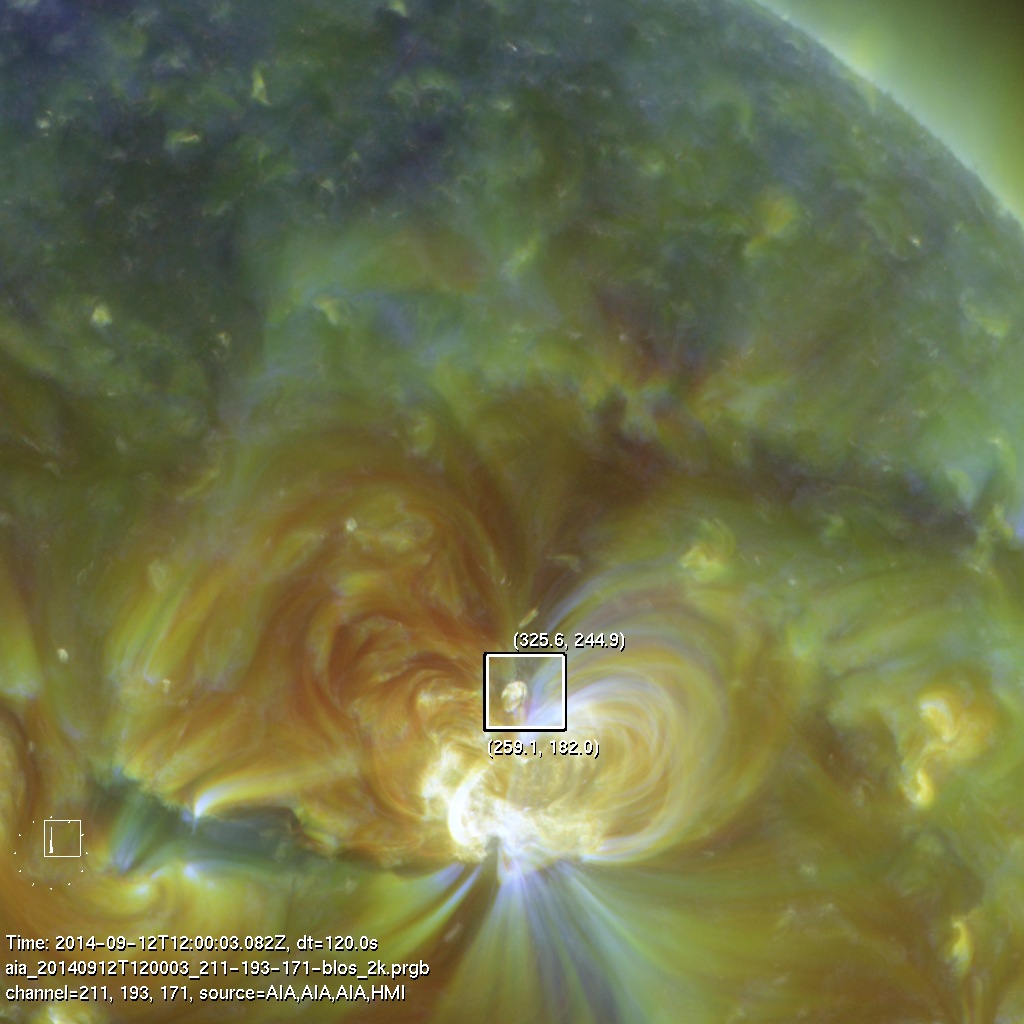
2014-09-12T12:00:03 --> 2014-09-12T13:30:03
Again an eruption from the small region in AR 12158 disturbed a large area to north.
Rating:
3.0 (0=lowest, 5=highest)
Num Ratings:1
Detected by halocme, Submitted at 2014-09-14T04:38:26
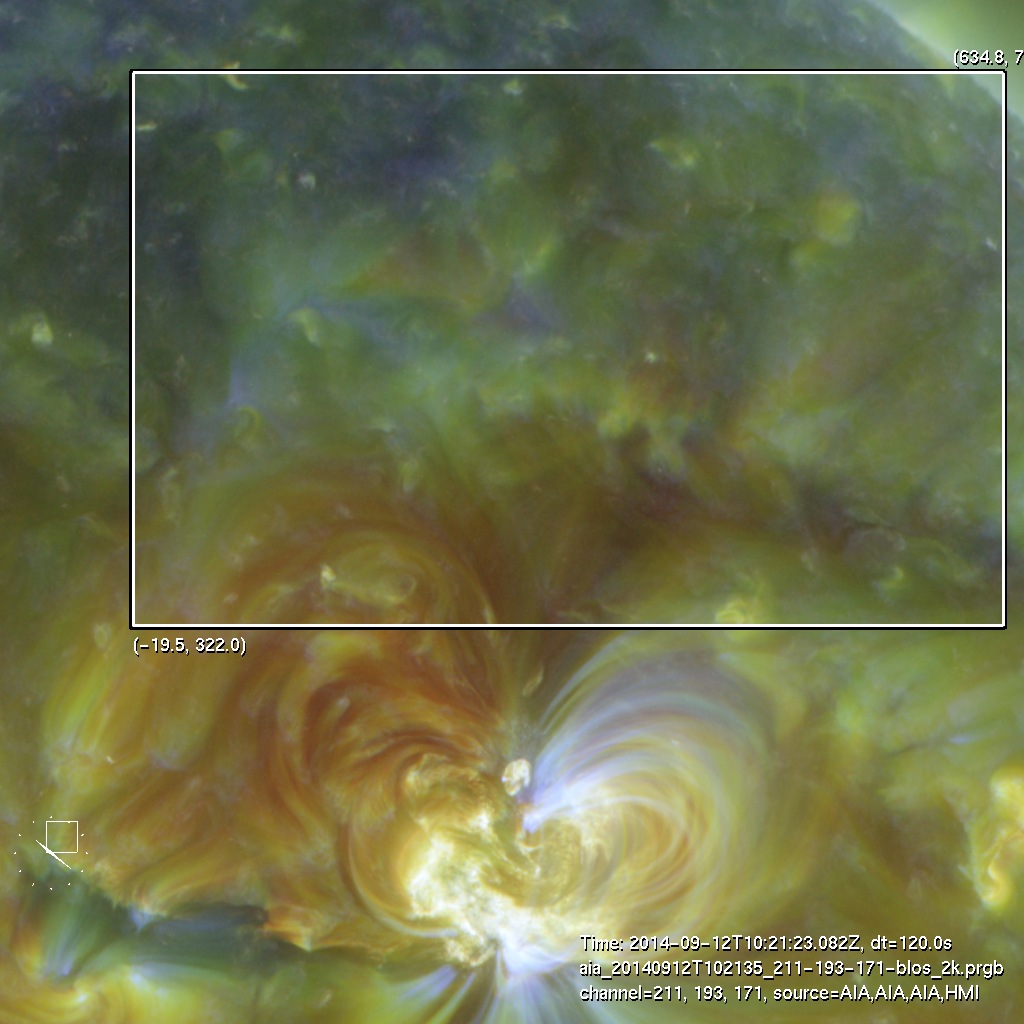
2014-09-12T09:35:23 --> 2014-09-12T11:15:23
A large area north of AR 12158 was disturbed. Although a small region in AR 12158 (central north) brightened, there is no larger agent seen to propagate to the disturbed area. This is much less spectacular than the eruption associated with the X1.6 flare, but it suggests that this region still keeps global connections.
Rating:
3.0 (0=lowest, 5=highest)
Num Ratings:1
Detected by halocme, Submitted at 2014-09-13T23:26:39
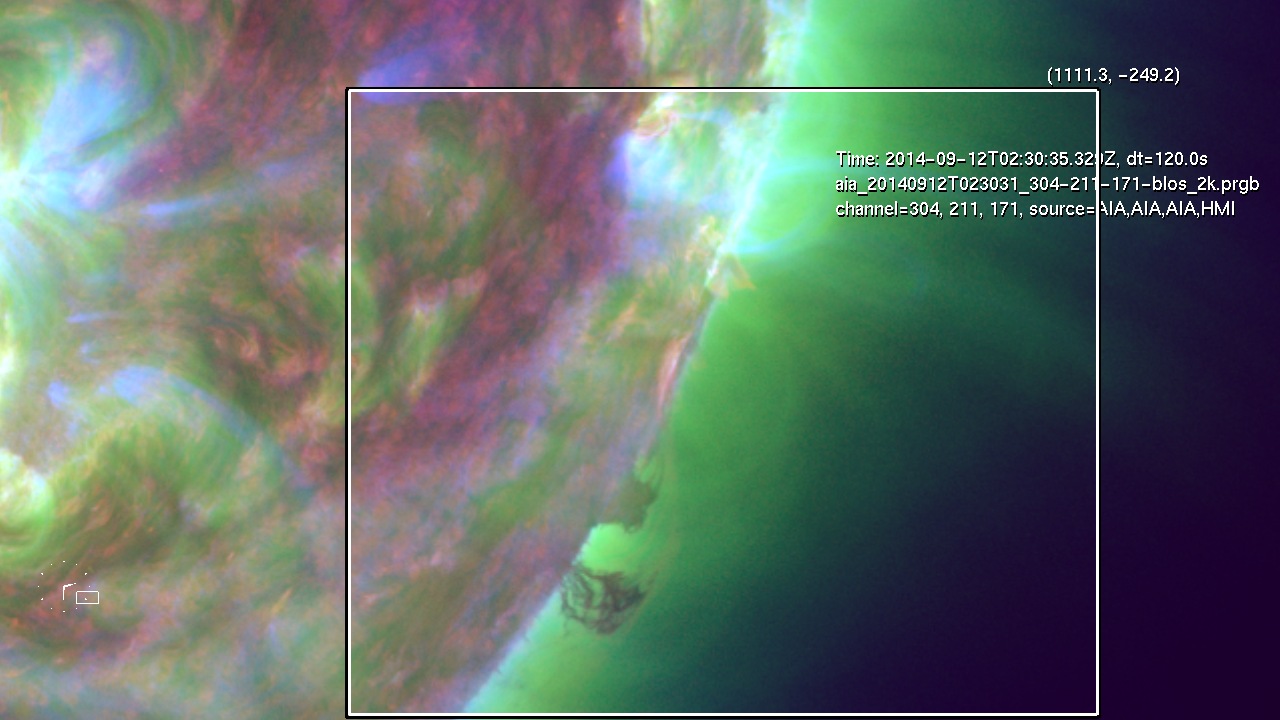
2014-09-12T01:30:35 --> 2014-09-12T03:40:35
This eruption accompanies small coronal dimming and post-eruption arcades. A sideway ejection to south is also noted.
Rating:
3.0 (0=lowest, 5=highest)
Num Ratings:1
Detected by halocme, Submitted at 2014-09-13T23:26:39
2014-09-12T01:30:35 --> 2014-09-12T03:40:35
This eruption accompanies small coronal dimming and post-eruption arcades. A sideway ejection to south is also noted.
Rating:
3.0 (0=lowest, 5=highest)
Num Ratings:1
Detected by halocme, Submitted at 2014-09-13T23:03:58
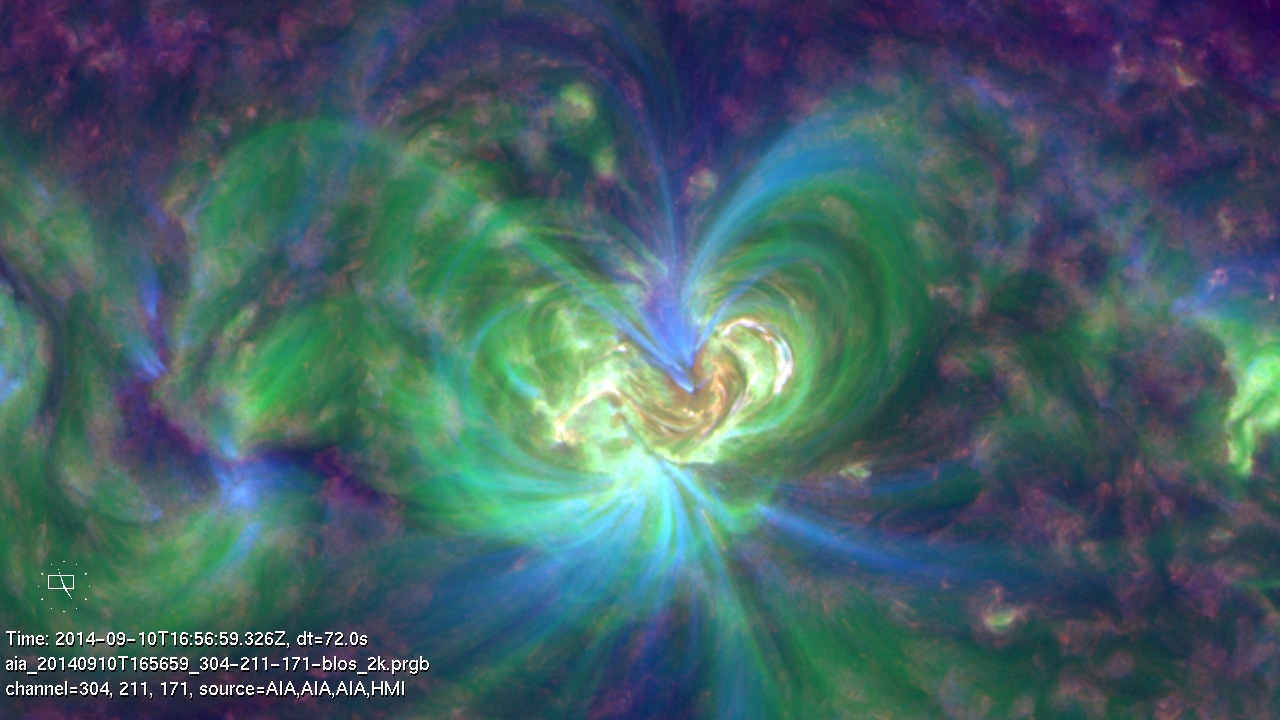
2014-09-10T16:30:35 --> 2014-09-10T18:30:35
This eruption resulted in an Earth-directed CME, which arrived at L1 46 hours later. The active region (AR 12158) was not so extended, but it contained a delta configuration. The eruption accompanied other expected signatures (such as LCPF, dimming, loop oscillations, etc.)for this magnitude.

Rating:
3.0 (0=lowest, 5=highest)
Num Ratings:1
Detected by halocme, Submitted at 2014-09-13T22:51:31
2014-09-10T09:00:03 --> 2014-09-10T10:00:03
Looking for changes in and near AR 12158, which hosted a big eruption later (see next two annotations). The GOES X-ray light curve barely shows it, but this brightening may correspond to a low B-class.

Rating:
3.0 (0=lowest, 5=highest)
Num Ratings:1
Detected by halocme, Submitted at 2014-09-13T22:42:13
2014-09-09T23:50:23 --> 2014-09-10T02:30:23
This was probably from a region slightly behind the limb. Adjecent corona does not seem to be affected.
