
Highest Rated Events (only 193 and 304 shown) All AR FE FL

Rating:
3.0 (0=lowest, 5=highest)
Num Ratings:1
Detected by halocme, Submitted at 2017-11-22T06:19:08
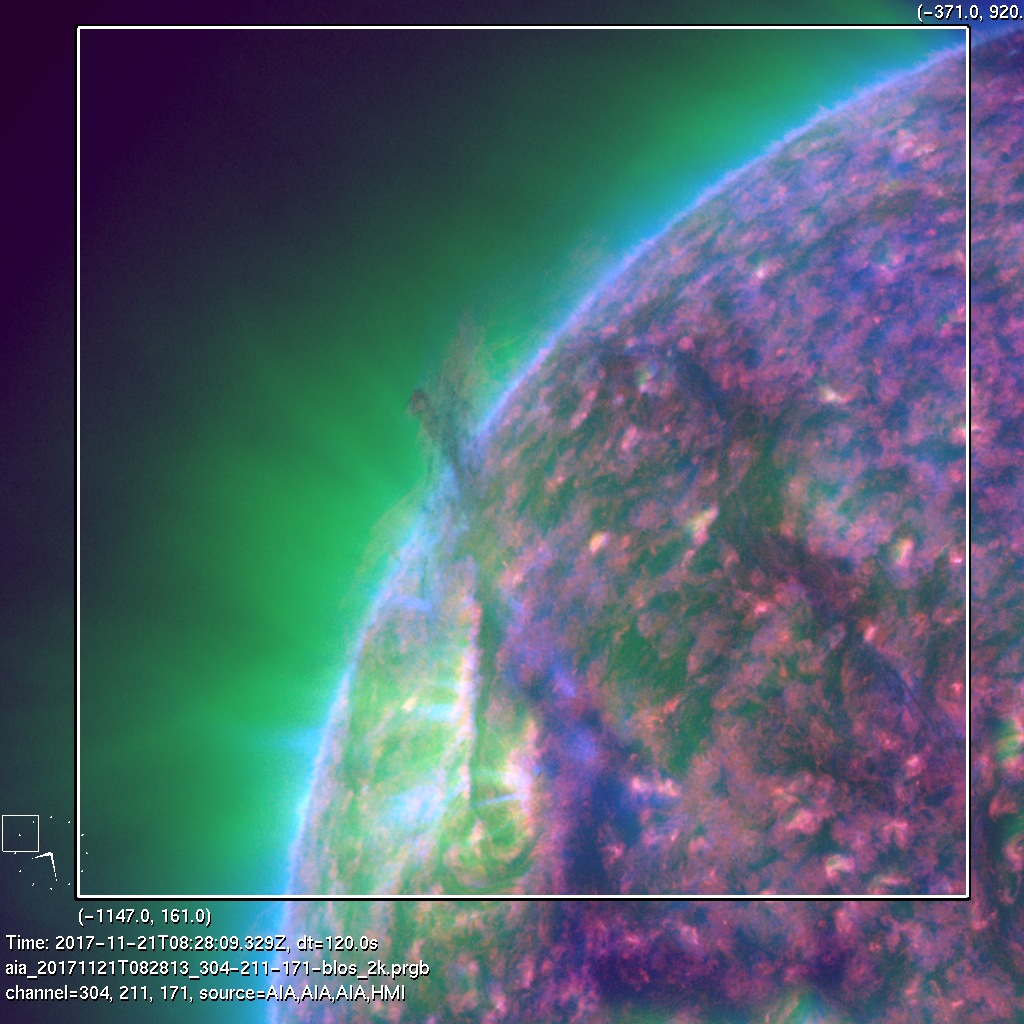
2017-11-21T07:00:09 --> 2017-11-21T13:00:09
Although the filament/prominence material seemed to largely move northward to lower heights, the overlying corona was also found dimmer in the direction of 9:30 or so. This event was responsible for a CME with a spiky front (see http://spaceweather.gmu.edu/seeds/mkmovie.php?cme=20171121.121207.w045.v0089.p080&frame=34&r).
Rating:
3.0 (0=lowest, 5=highest)
Num Ratings:1
Detected by halocme, Submitted at 2017-11-21T16:24:53
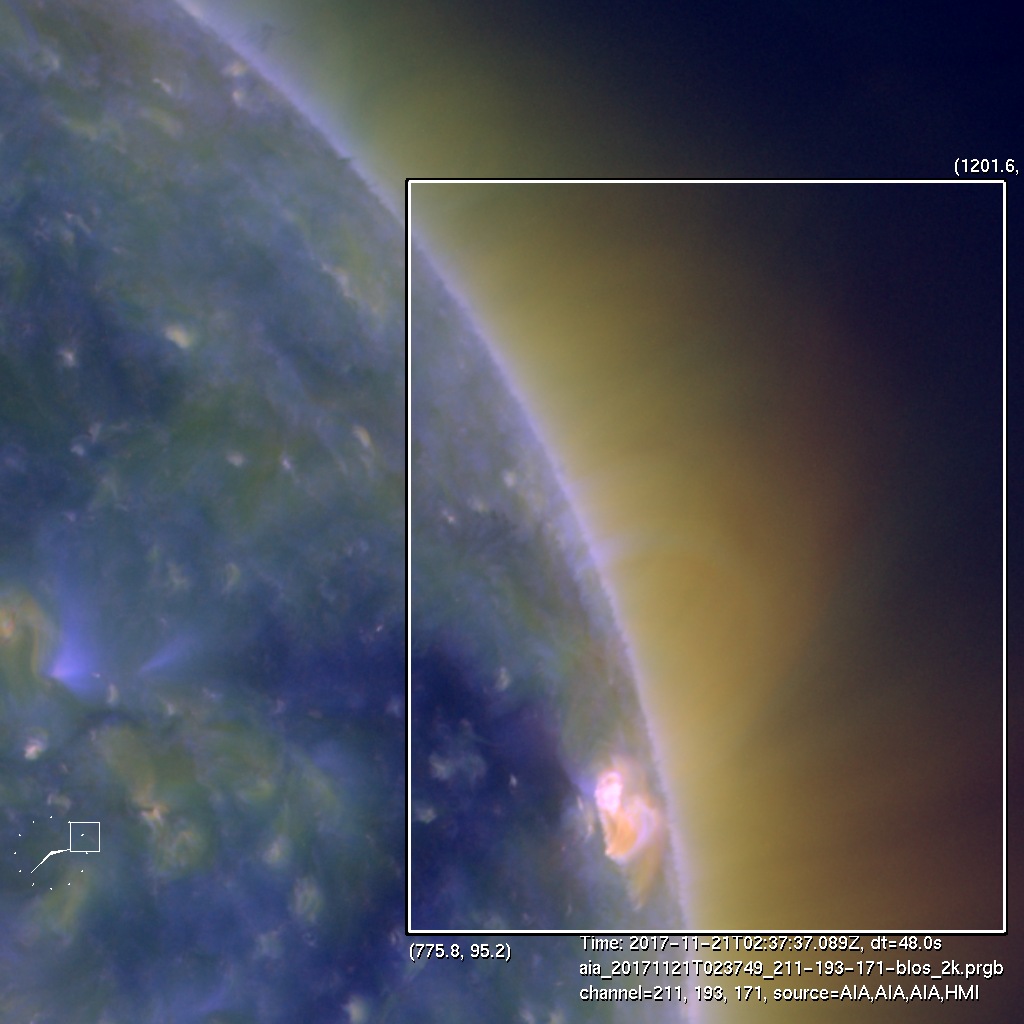
2017-11-21T01:52:01 --> 2017-11-21T02:50:25
A minor eruption was associated with a B1.7 flare in an unnumbered region (no sunspots). Subsequently large scale loops to the north were disturbed, but the disturbance did not seem to go beyond the northernmost footpoints of such loops.
Rating:
3.0 (0=lowest, 5=highest)
Num Ratings:1
Detected by halocme, Submitted at 2017-11-21T06:56:54
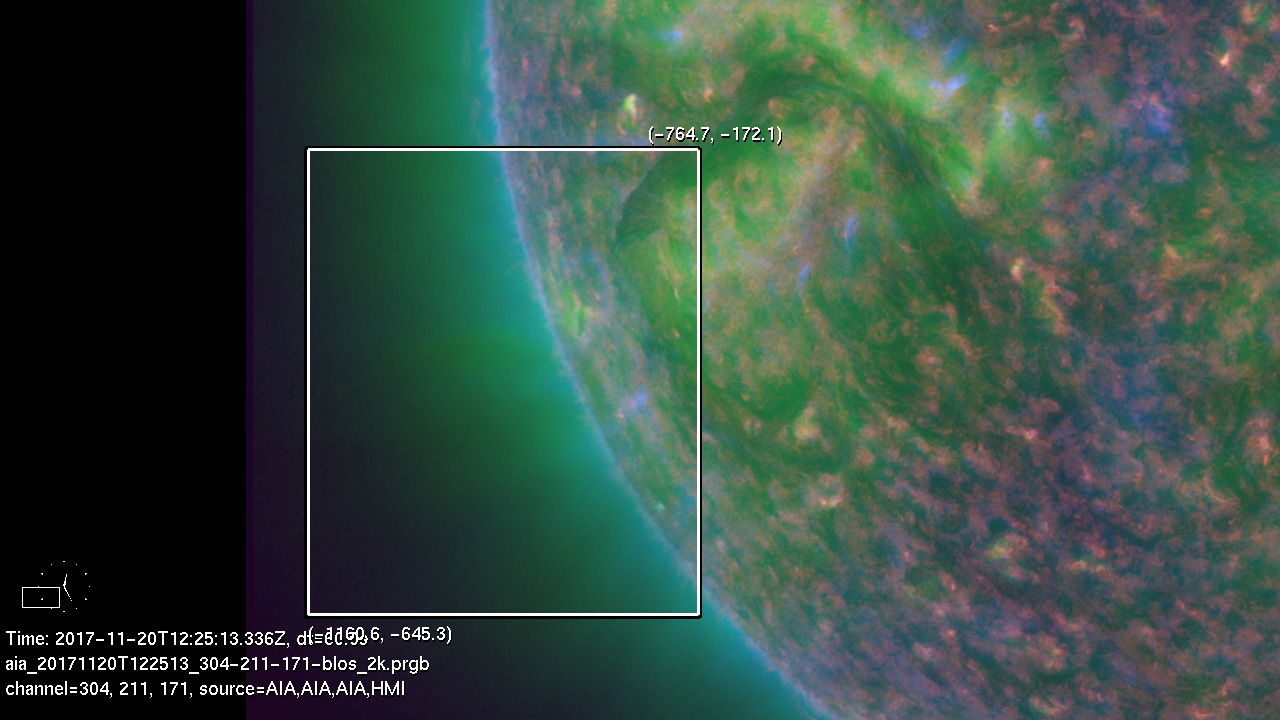
2017-11-20T12:25:13 --> 2017-11-20T13:11:13
Minor eruption from a region ~20 degrees behind the east limb (based on STEREO-A EUVI data).
Rating:
3.0 (0=lowest, 5=highest)
Num Ratings:1
Detected by halocme, Submitted at 2017-11-21T06:44:41
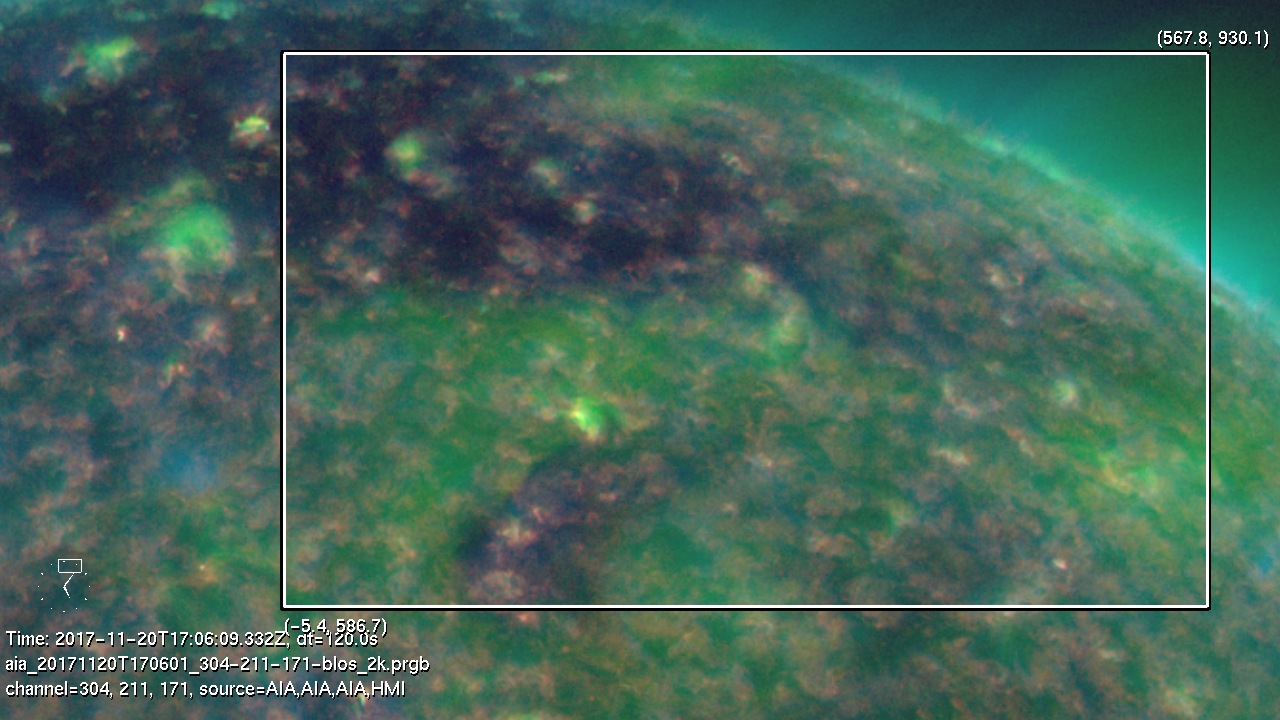
2017-11-20T13:00:09 --> 2017-11-20T20:00:09
At a high latitude region in the northern hemisphere, large-scale brightening was seen, which was probably a post eruption arcede. There was a filament eruption northwest of the brightening area, but it is not clear it was related.

Rating:
3.0 (0=lowest, 5=highest)
Num Ratings:1
Detected by halocme, Submitted at 2017-11-20T04:41:51
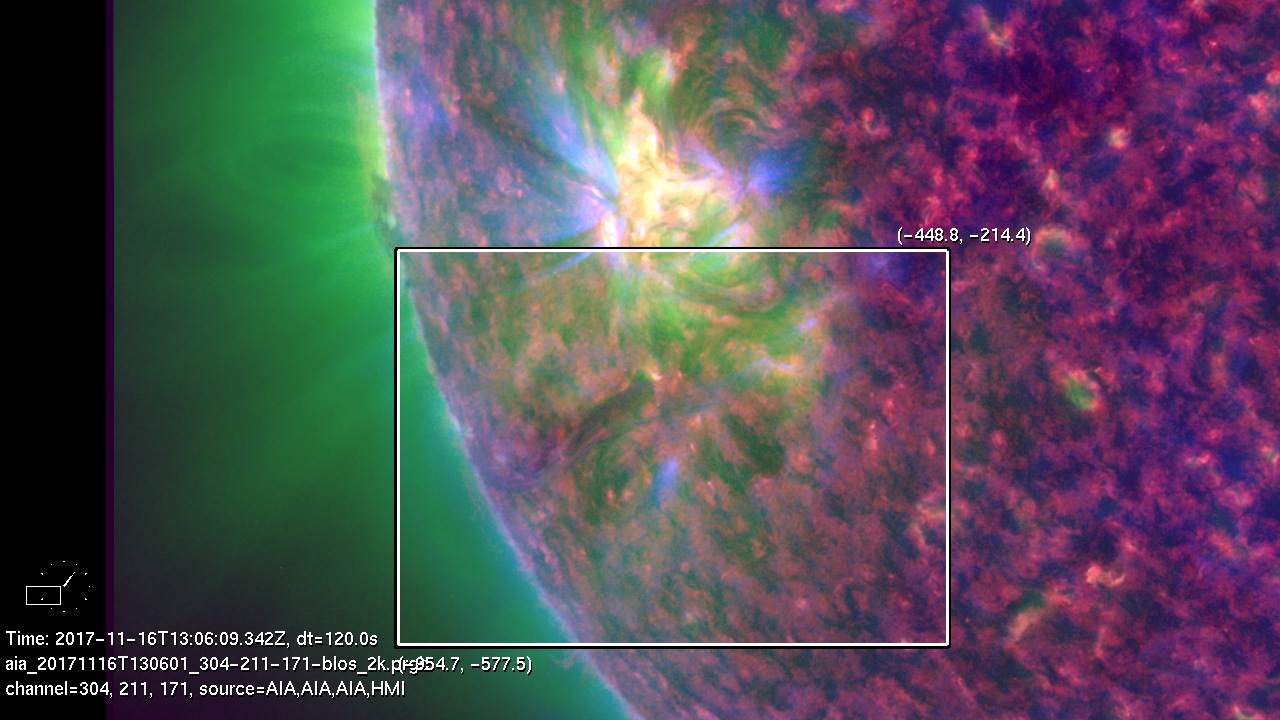
2017-11-16T12:00:09 --> 2017-11-17T03:00:09
A slow eruption from the quiescent region south of AR 12687. A diffuse filament is seen to slowly erupt southward around 1900 UT, resulting in a spreading ribbon.
Rating:
3.0 (0=lowest, 5=highest)
Num Ratings:1
Detected by halocme, Submitted at 2017-11-20T04:33:14
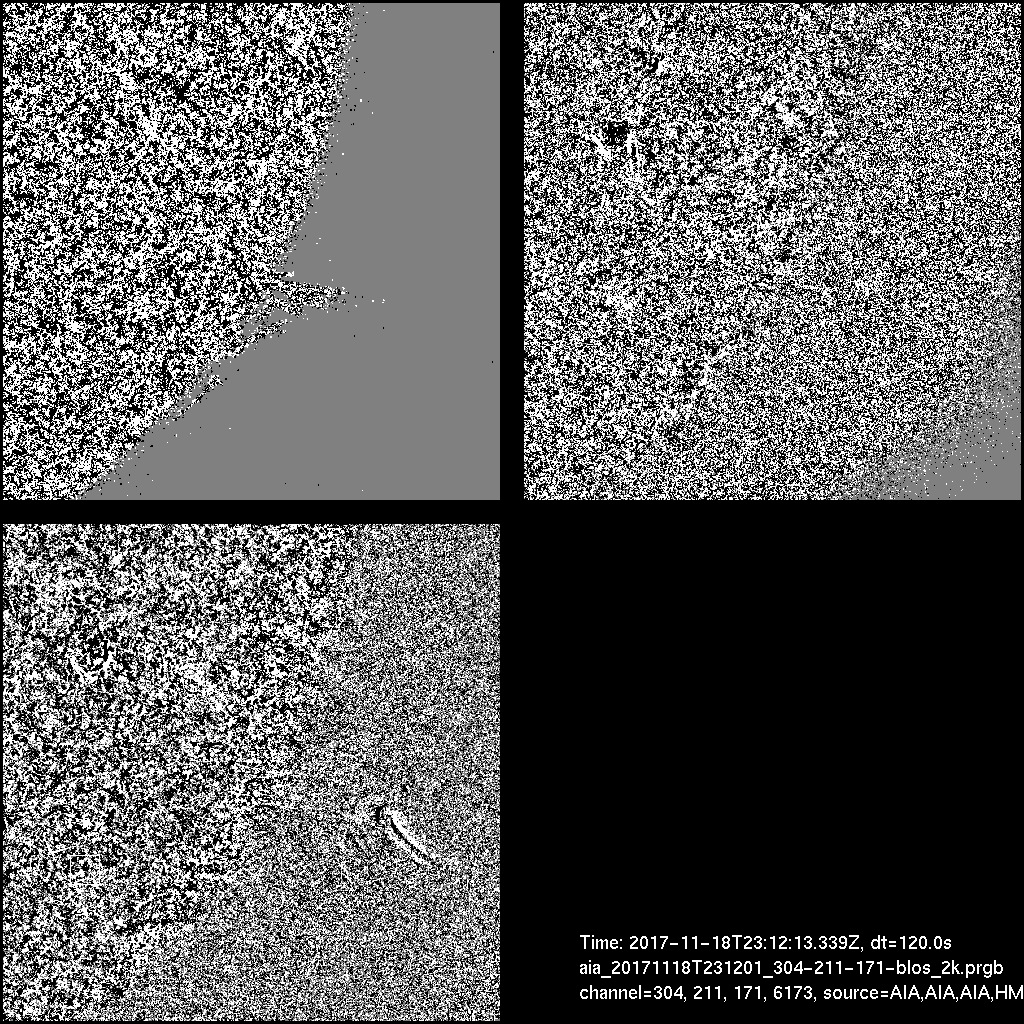
2017-11-18T21:40:13 --> 2017-11-19T05:00:13
A flux-rope-like structure erupts slowly over the west limb. This is so diffuse that it is seen only in difference images, in 171 A in particular. It may not have escaped the Sun since there was no CME.

Rating:
3.0 (0=lowest, 5=highest)
Num Ratings:1
Detected by halocme, Submitted at 2017-11-20T04:25:05
2017-11-18T13:50:25 --> 2017-11-18T14:26:25
Another diffuse jet seen only in difference images. No untwisting motions may be seen.

Rating:
3.0 (0=lowest, 5=highest)
Num Ratings:1
Detected by halocme, Submitted at 2017-11-20T04:15:53
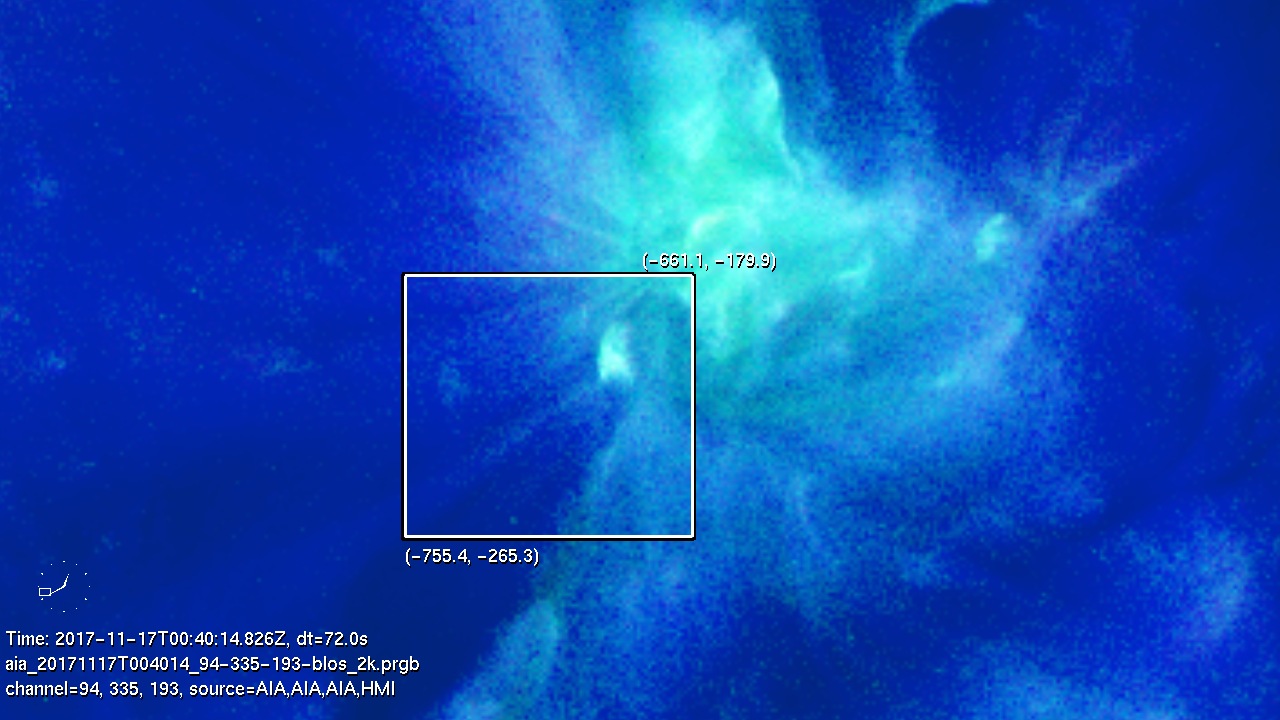
2017-11-17T00:10:14 --> 2017-11-17T01:15:02
The flare occurred in the southeastern periphery of AR 12687. Around this time the region still consisted of beta spots whose area was 90 MSH. The flare was accompanied by a jet.
Rating:
3.0 (0=lowest, 5=highest)
Num Ratings:1
Detected by halocme, Submitted at 2017-11-20T04:15:53
2017-11-17T00:10:14 --> 2017-11-17T01:15:02
The flare occurred in the southeastern periphery of AR 12687. Around this time the region still consisted of beta spots whose area was 90 MSH. The flare was accompanied by a jet.

Rating:
3.0 (0=lowest, 5=highest)
Num Ratings:1
Detected by gchintzo, Submitted at 2017-11-07T22:23:02
2017-11-05T00:00:09 --> 2017-11-07T00:00:09
This is the long and narrow coronal hole seen over the previous days. As the sun rotates this coronal hole seems to be an extension of the north polar coronal hole.

Rating:
3.0 (0=lowest, 5=highest)
Num Ratings:1
Detected by gchintzo, Submitted at 2017-11-07T22:07:07
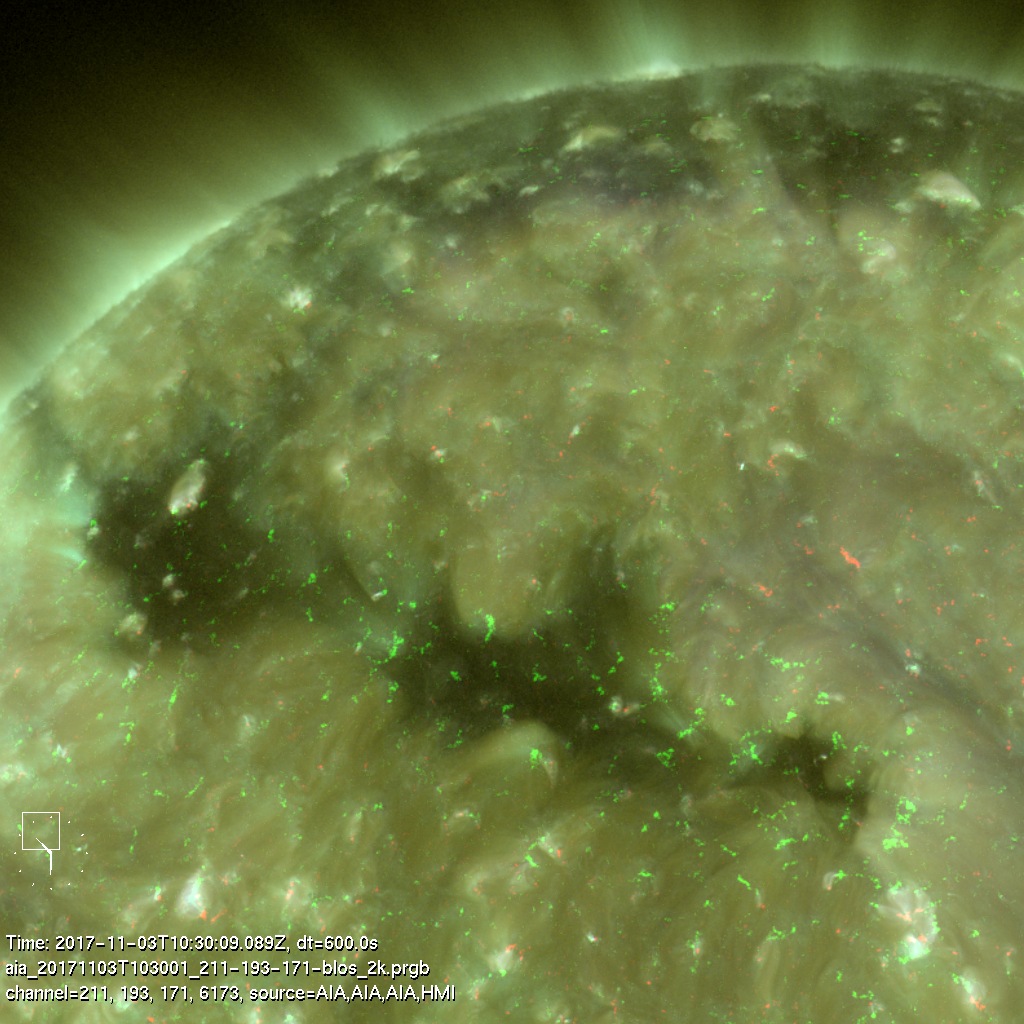
2017-11-02T14:30:09 --> 2017-11-03T20:20:09
A coronal hole (dark region on the North East quadrant of the solar disk) is accompanied by two filaments running parallel to it at higher latitudes. As the time goes by, the high-latitude filament erupts folllowed by the one nearest to the coronal hole ~10 hours later. No CME was identified with SOHO/LASCO; therefore, the eruptions were not ejective but rather contained in the low solar corona.
Rating:
3.0 (0=lowest, 5=highest)
Num Ratings:1
Detected by gchintzo, Submitted at 2017-11-07T21:46:00
2017-11-02T14:30:09 --> 2017-11-03T20:20:09
The source region for a CME eruption seen from SOHO/LASCO (http://spaceweather.gmu.edu/seeds/dailymkmovie.php?cme=20171103&r) at the West limb of the sun.

Rating:
3.0 (0=lowest, 5=highest)
Num Ratings:1
Detected by gchintzo, Submitted at 2017-11-03T00:48:08
2017-10-31T16:20:09 --> 2017-11-01T03:40:09
Recurring/homologous jet activity in the south pole of the sun. Occasionally, absorbing material (mini-filament) is seen to lift in tandem to the jet activity.

Rating:
3.0 (0=lowest, 5=highest)
Num Ratings:1
Detected by gchintzo, Submitted at 2017-11-03T00:31:48
2017-10-30T11:30:09 --> 2017-11-01T08:40:09
A quiescent filament viewed at the solar limb (dark "tornado"-like features presumably are cool material sitting at one section of the structure). The filament and its remote connectivities is seen to progressively lift until a certain height where it accelerates as an eruption. This event is associated with a narrow-angle, jet-like CME seen by SOHO/LASCO (see http://spaceweather.gmu.edu/seeds/dailymkmovie.php?cme=20171101&r).

Rating:
3.0 (0=lowest, 5=highest)
Num Ratings:1
Detected by gchintzo, Submitted at 2017-11-03T00:21:27
2017-10-30T00:00:09 --> 2017-10-31T02:30:09
A narrow but elongated coronal hole in the south hemisphere of the sun. Note the presence of a flipped J-shaped filament very close to the coronal hole's west boundary.

Rating:
3.0 (0=lowest, 5=highest)
Num Ratings:1
Detected by halocme, Submitted at 2017-10-19T00:54:39
2017-10-18T05:25:13 --> 2017-10-18T10:00:01
As reported earlier, there were two eruptions on the far side (~E125) around the location that used to be AR 12673. The first one produced a notable EUV wave propagating across the disk, covering the whole longitudes in the visible hemisphere. The second one was minor propagating only along the limb (clockwise).
Rating:
3.0 (0=lowest, 5=highest)
Num Ratings:1
Detected by halocme, Submitted at 2017-10-19T00:48:27
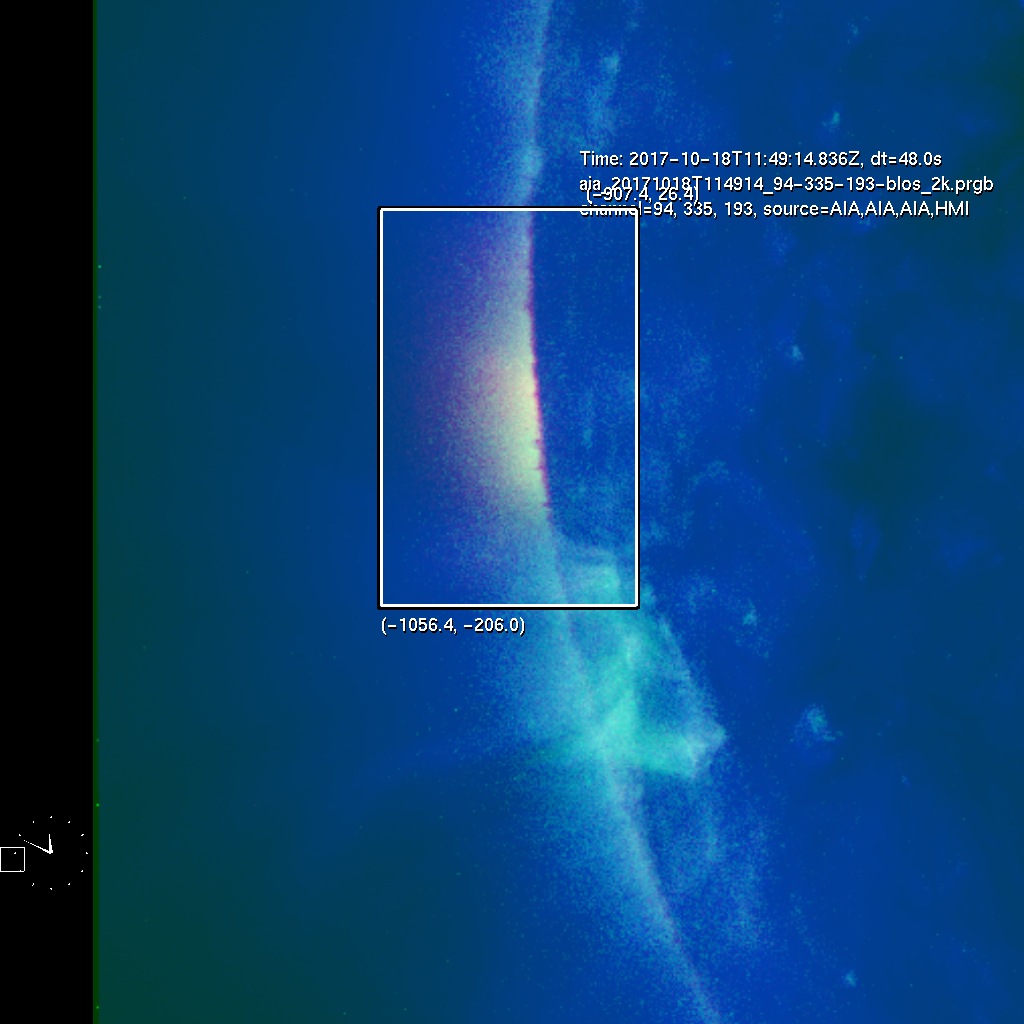
2017-10-18T05:25:14 --> 2017-10-18T14:01:14
Today's GOES X-ray light curves show a long duration event peaked at B2.3. This represents a post-eruption arcade following an eruption from a region some 35 degrees behind the east limb (which turned out to be around the location of AR 12673.) The associated eruption occurred about 2.5 hours before, to the south of what became bright as seen over the limb. This became a bright CME (http://spaceweather.gmu.edu/seeds/mkmovie.php?cme=20171018.053607.w118.v0623.p097&frame=7&r), which was immediately followed by another, similar-looking CME (http://spaceweather.gmu.edu/seeds/mkmovie.php?cme=20171018.071207.w116.v0397.p089&frame=9&r). The projected signature of the second eruption in AIA images is an EUV wave to the north of that associated with the first eruption. Details TBD until all the EUVI data become available.
Rating:
3.0 (0=lowest, 5=highest)
Num Ratings:1
Detected by jinmeng, Submitted at 2017-10-16T21:43:33
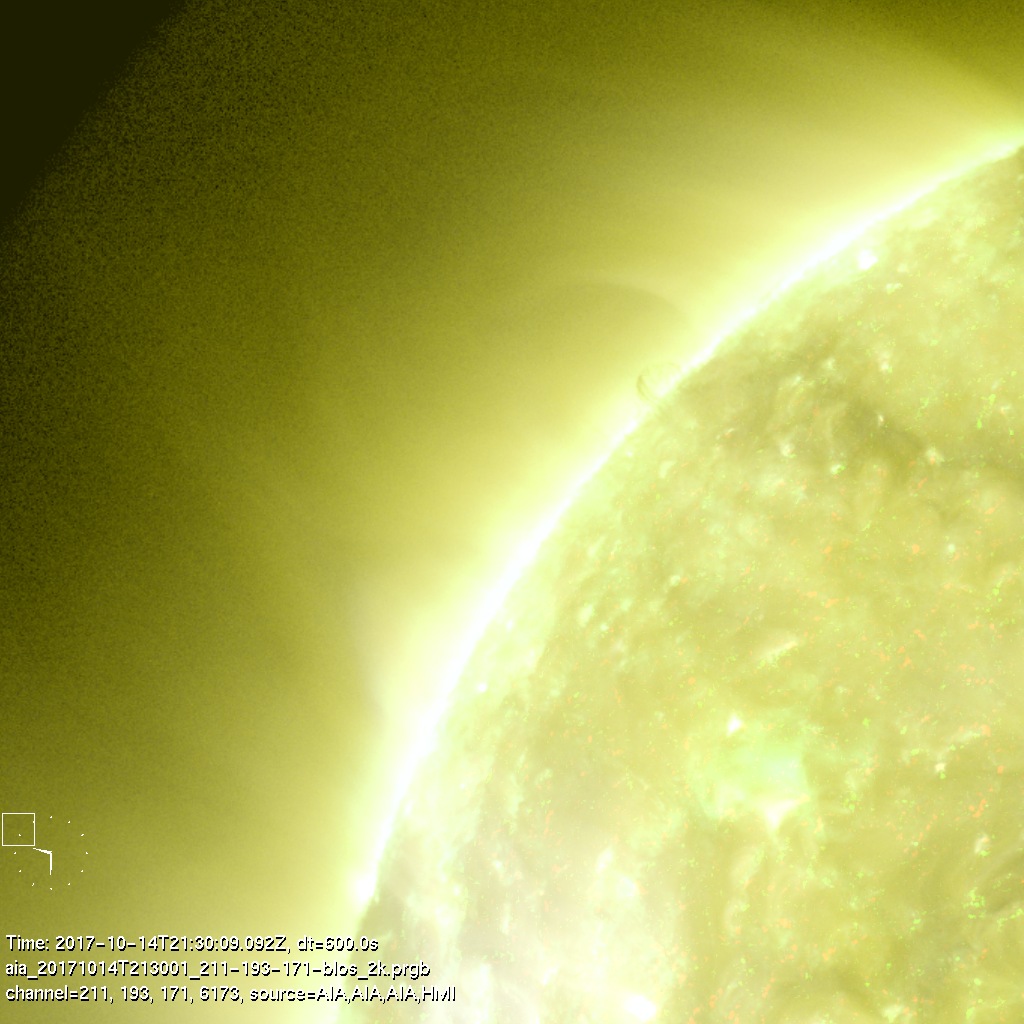
2017-10-14T08:30:09 --> 2017-10-14T23:40:09
A filament eruption was observed at the east limb. The filament material is located at the bottom of a flux rope (dark cavity).
Rating:
3.0 (0=lowest, 5=highest)
Num Ratings:1
Detected by jinmeng, Submitted at 2017-10-16T21:31:38
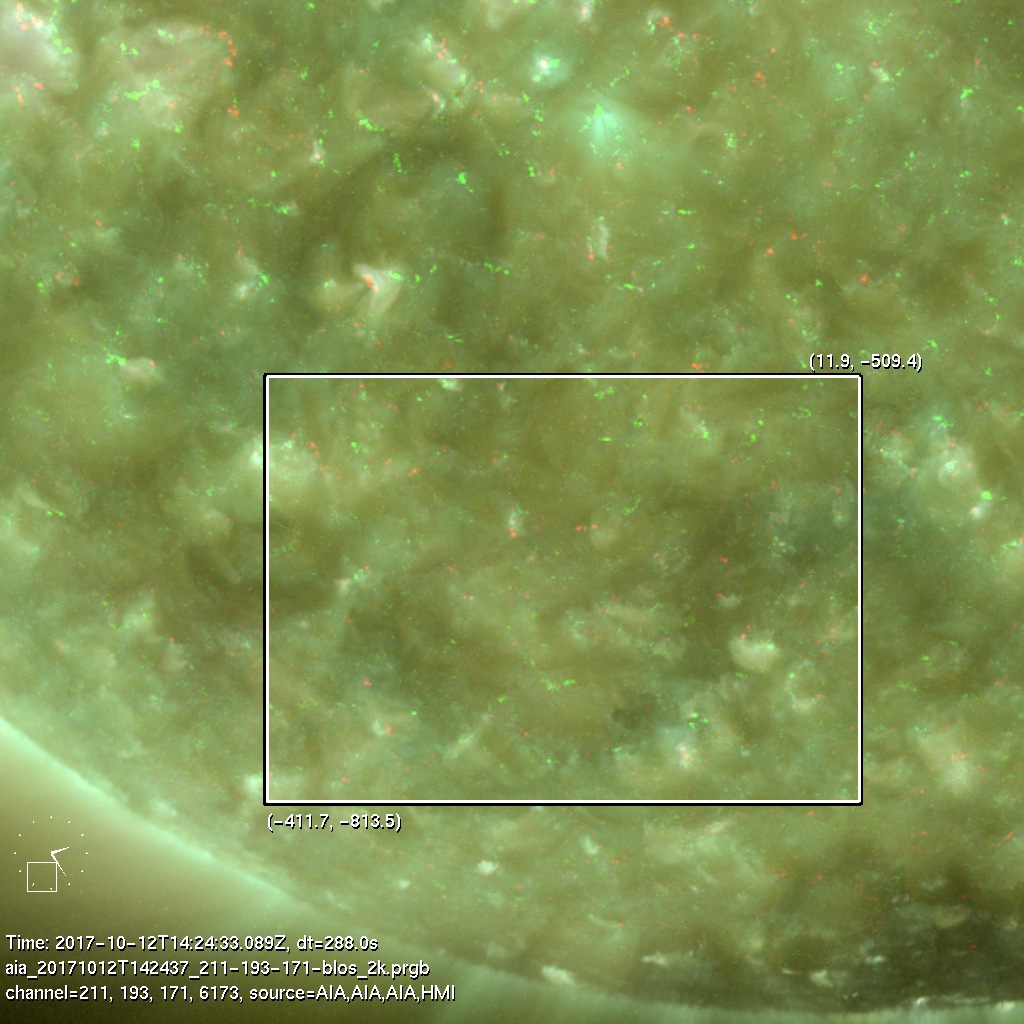
2017-10-12T08:10:09 --> 2017-10-12T16:30:09
A quiet-Sun filament eruption from southern hemisphere.

Rating:
3.0 (0=lowest, 5=highest)
Num Ratings:1
Detected by jinmeng, Submitted at 2017-10-16T21:22:16
2017-10-10T21:30:09 --> 2017-10-11T00:00:09
A narrow jet-like eruption was observed at the west limb.
