
Highest Rated Events (only 193 and 304 shown) All AR FE FL

Rating:
3.0 (0=lowest, 5=highest)
Num Ratings:1
Detected by gchintzo, Submitted at 2019-01-18T19:21:13
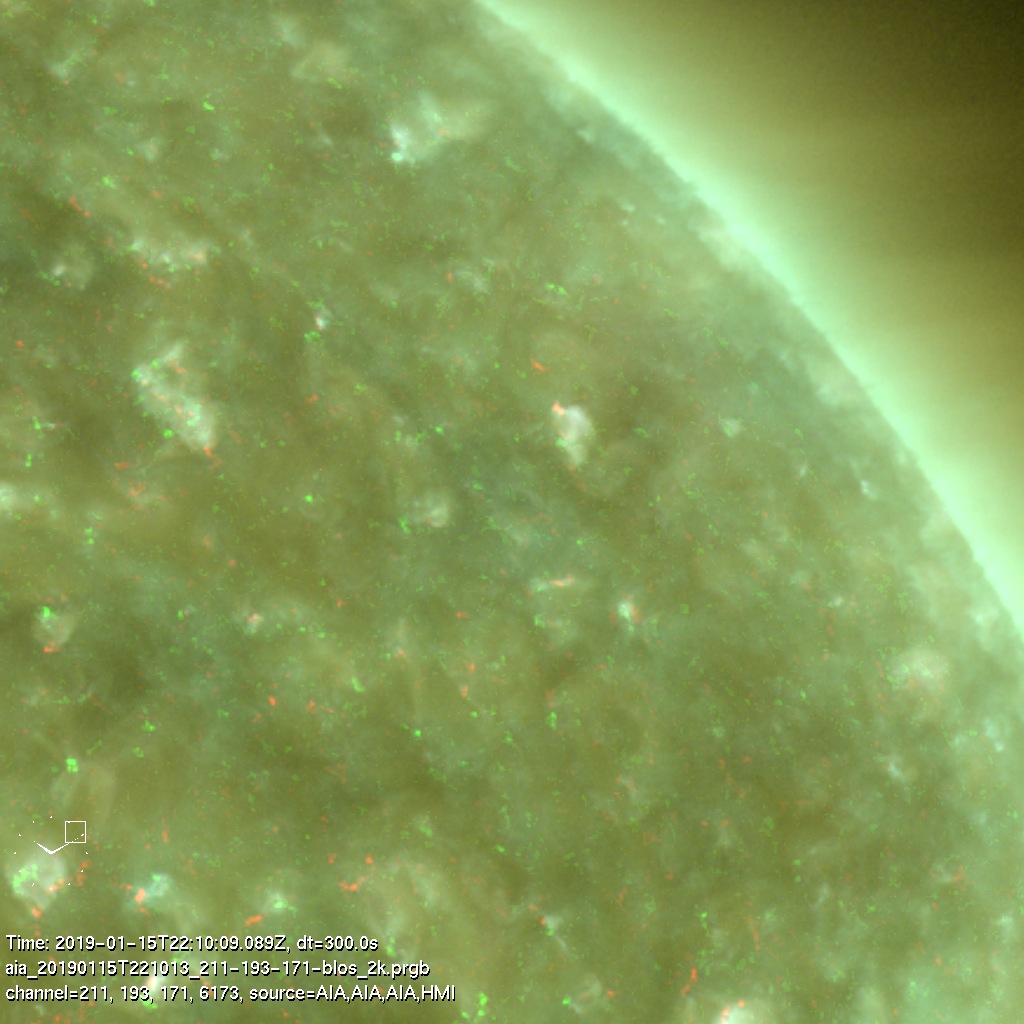
2019-01-15T16:30:09 --> 2019-01-15T22:20:09
A minifilament (small dark feature in the left side of the field of view). The eruption is non-radial as it can be seen as a dark front moving fast over the solar disk.

Rating:
3.0 (0=lowest, 5=highest)
Num Ratings:1
Detected by halocme, Submitted at 2019-01-05T22:58:56
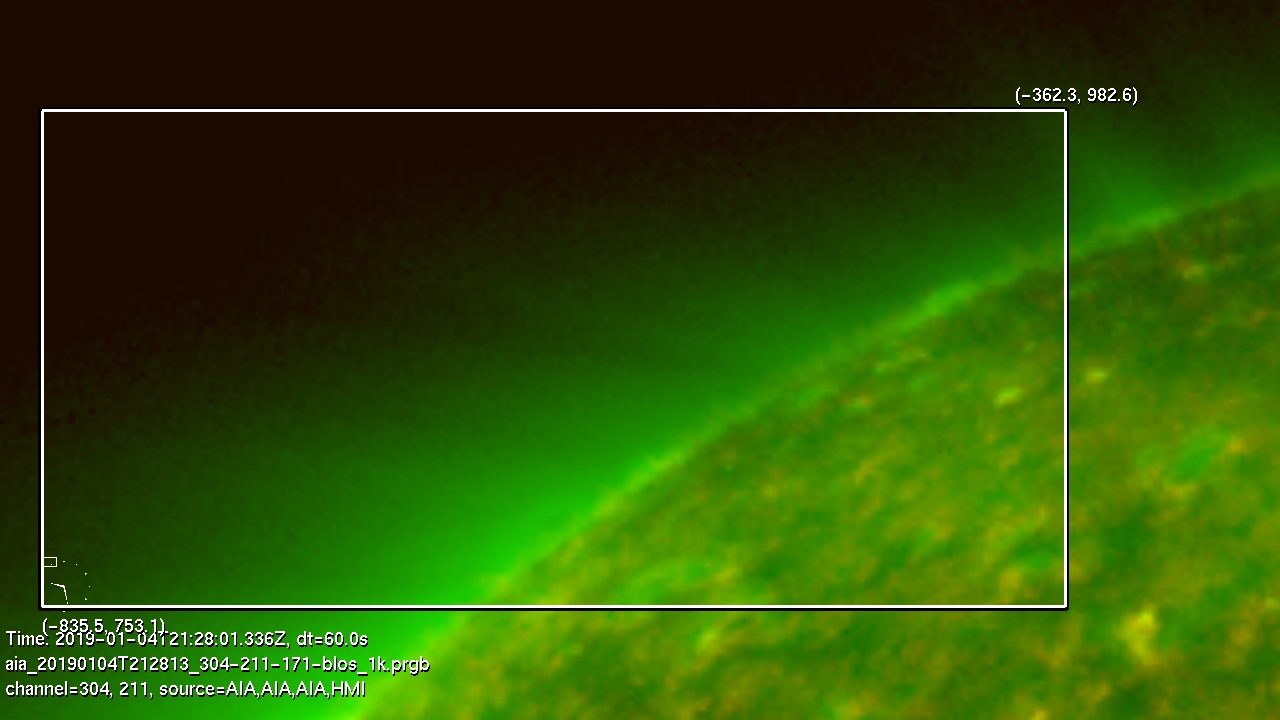
2019-01-04T20:30:01 --> 2019-01-04T21:30:01
Two jets are seen in this movie. Both were ejected almost horizintally, far from the radial directions.

Rating:
3.0 (0=lowest, 5=highest)
Num Ratings:1
Detected by halocme, Submitted at 2019-01-05T22:54:28
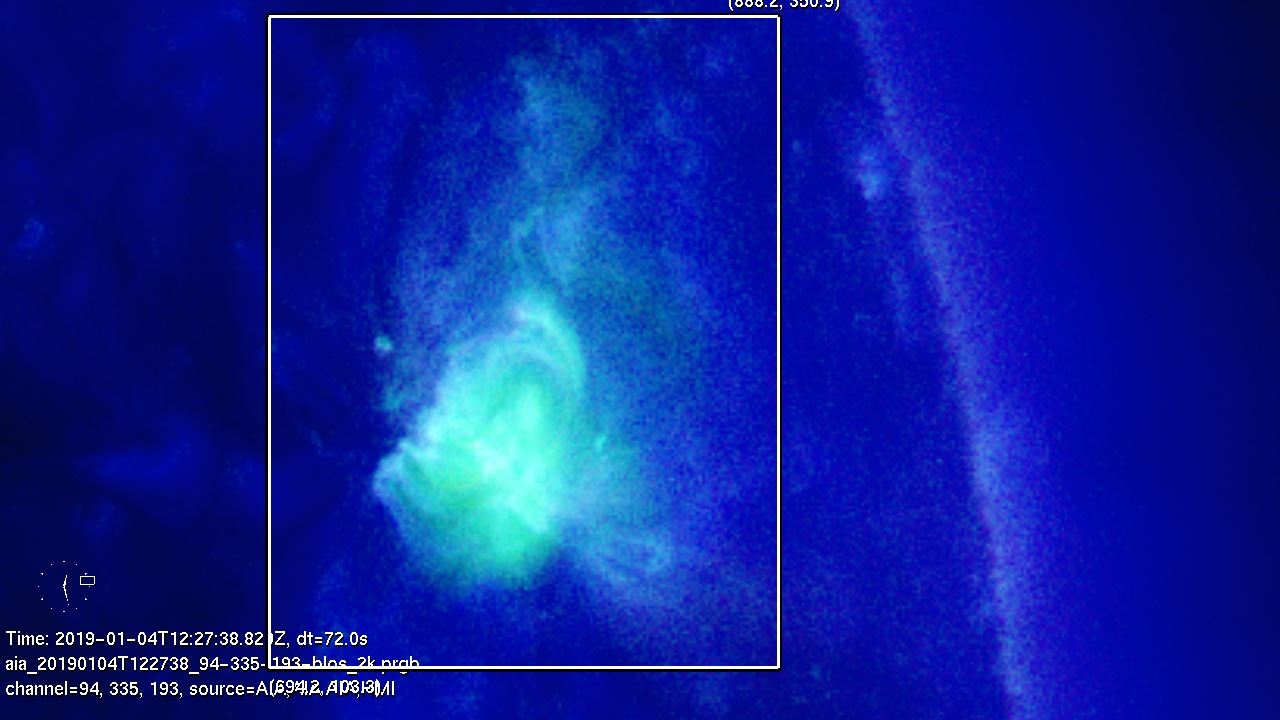
2019-01-04T10:50:26 --> 2019-01-04T12:50:26
This flare, in AR 12732, showed eruptive signatures such as outward motions and cusp-like post-flare loops. But the large-scale effects were limited. The active region was already tired.
Rating:
3.0 (0=lowest, 5=highest)
Num Ratings:1
Detected by halocme, Submitted at 2019-01-05T22:25:51
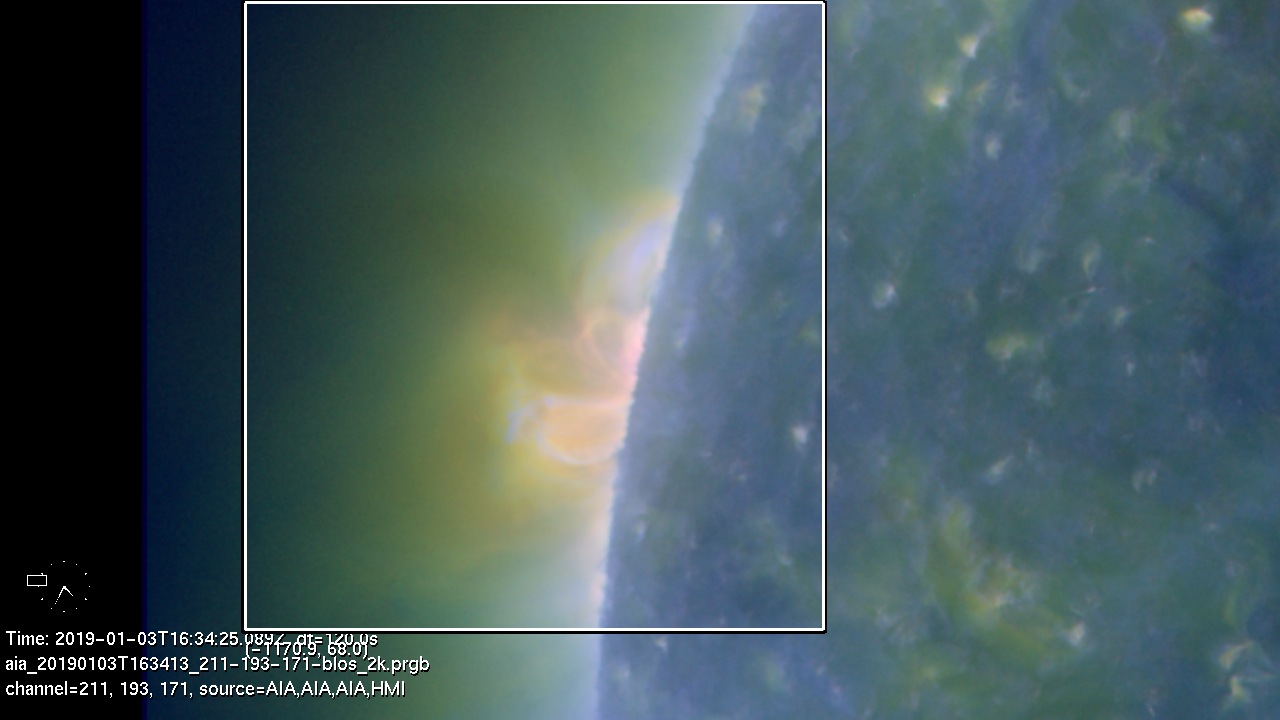
2019-01-03T16:20:25 --> 2019-01-03T18:40:25
The region was ~5 degrees behind the limb, which arrived in Earth view only as a plage region. The eruptive motion was largely toward north, hardly contributing to a CME.
Rating:
3.0 (0=lowest, 5=highest)
Num Ratings:1
Detected by halocme, Submitted at 2019-01-05T22:25:51
2019-01-03T16:20:25 --> 2019-01-03T18:40:25
The region was ~5 degrees behind the limb, which arrived in Earth view only as a plage region. The eruptive motion was largely toward north, hardly contributing to a CME.
Rating:
3.0 (0=lowest, 5=highest)
Num Ratings:1
Detected by halocme, Submitted at 2019-01-05T22:14:10
2019-01-03T15:50:25 --> 2019-01-03T16:50:25
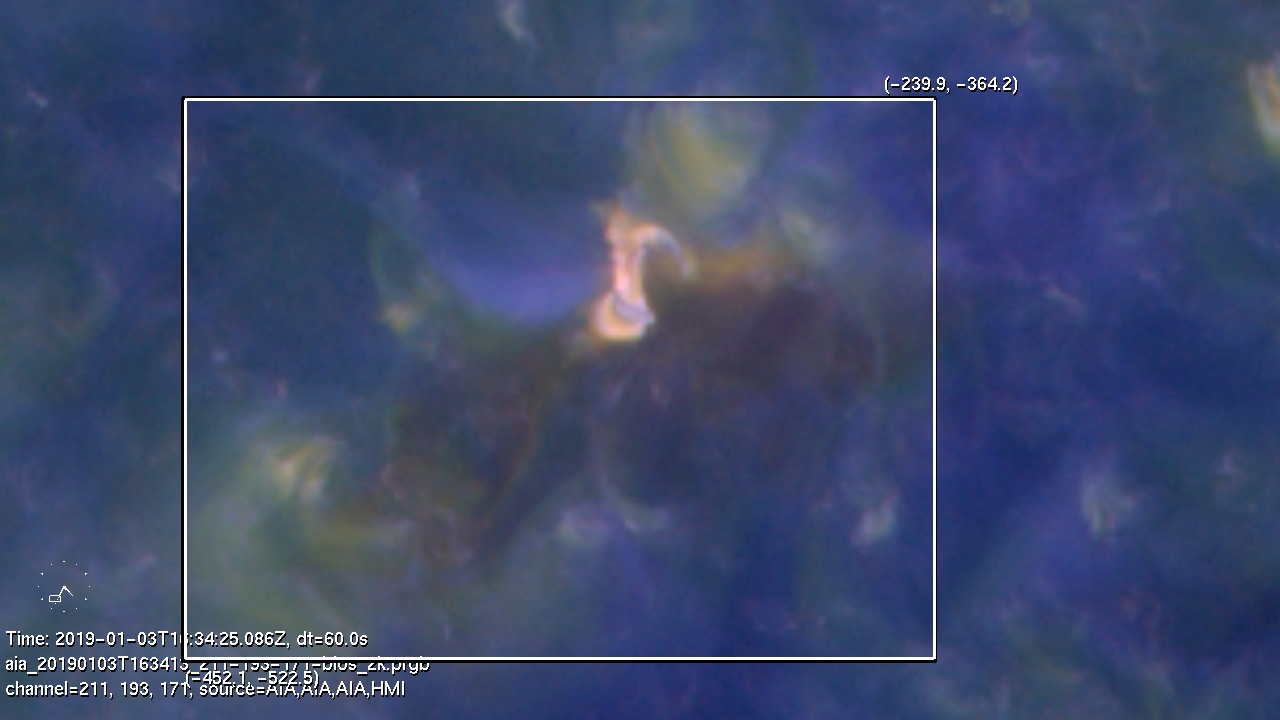
This eruption is from an isolated sigmoid in the quiescent region, causing temporary dimming in the adjacent region.

Rating:
3.0 (0=lowest, 5=highest)
Num Ratings:1
Detected by halocme, Submitted at 2019-01-05T22:08:43
2019-01-02T19:25:13 --> 2019-01-03T00:41:13
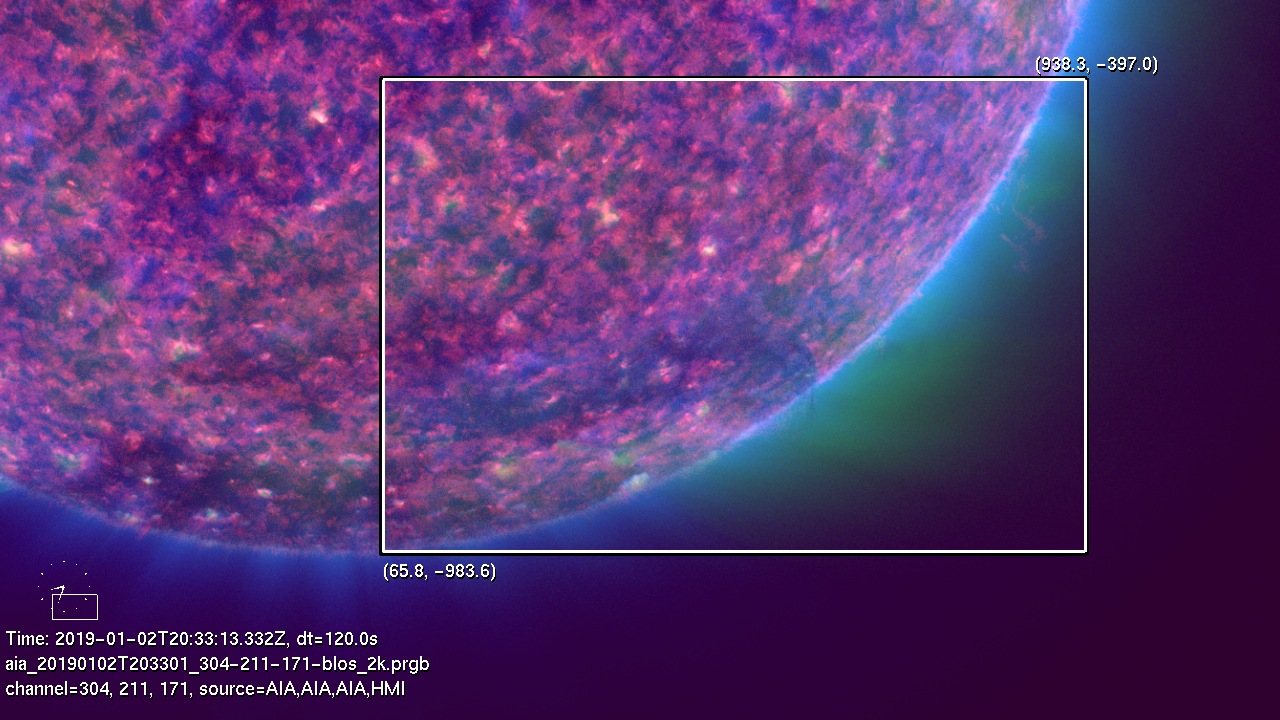
This is best seen in intensity images in 304 A. Other low coronal signatures seem to be quite limited, implying that it is not a major event. The associated CME is not impressive (http://spaceweather.gmu.edu/seeds/mkmovie.php?cme=20190102.234807.w012.v0596.p251&frame=6&r_. Part of the reason may be that equatorial coronal holes prevent the eruption extending toward the equator. This event was predicted by a famous solar physicist shortly before the occurrence (https://twitter.com/cosmic_jet/status/1080578605271273472).
Rating:
3.0 (0=lowest, 5=highest)
Num Ratings:1
Detected by halocme, Submitted at 2019-01-05T21:57:00
2019-01-02T01:30:01 --> 2019-01-02T02:50:25
The B2.8 flare in AR 12732 was quite eruptive, showing an EUV wave propagating mostly northward with counterclockwise rotation.

Rating:
3.0 (0=lowest, 5=highest)
Num Ratings:1
Detected by halocme, Submitted at 2019-01-05T21:56:59
2019-01-02T01:30:01 --> 2019-01-02T02:50:25
The B2.8 flare in AR 12732 was quite eruptive, showing an EUV wave propagating mostly northward with counterclockwise rotation.

Rating:
3.0 (0=lowest, 5=highest)
Num Ratings:1
Detected by halocme, Submitted at 2019-01-05T21:51:13
2019-01-01T14:30:01 --> 2019-01-01T15:40:01
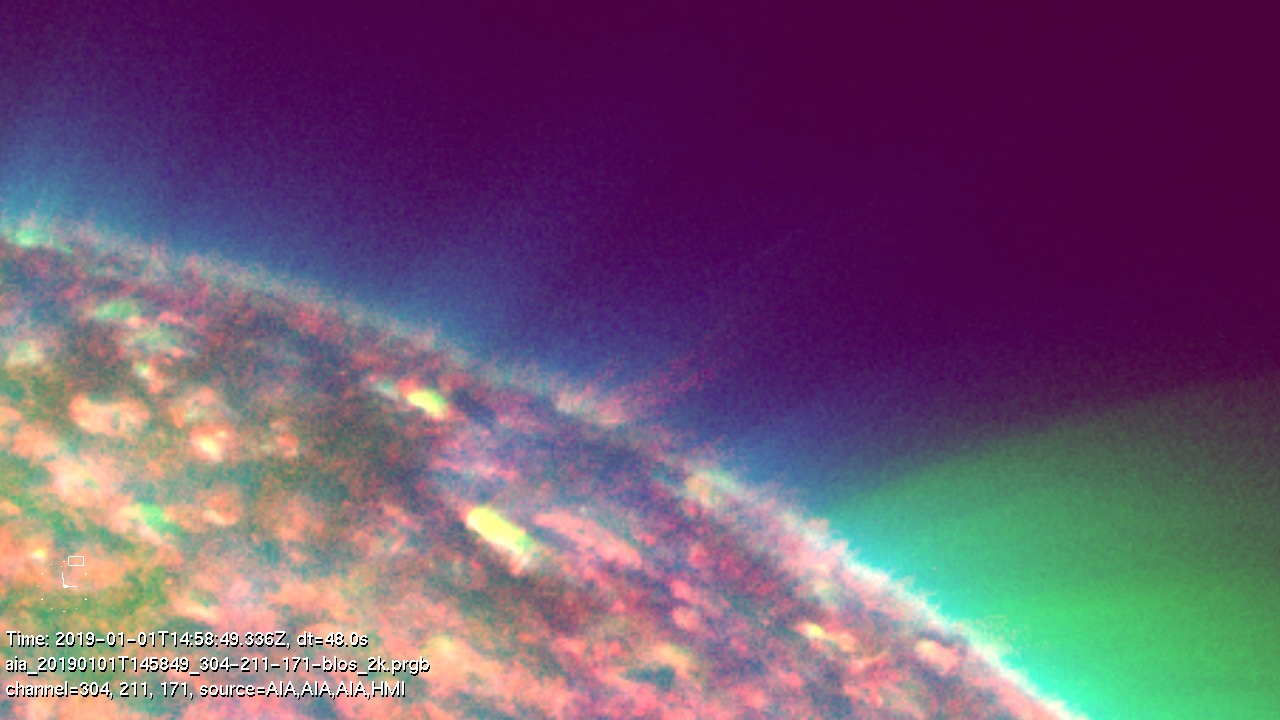
The outward motion included right-handed rotation.

Rating:
3.0 (0=lowest, 5=highest)
Num Ratings:1
Detected by halocme, Submitted at 2019-01-05T21:39:58
2019-01-01T10:50:25 --> 2019-01-01T12:20:25
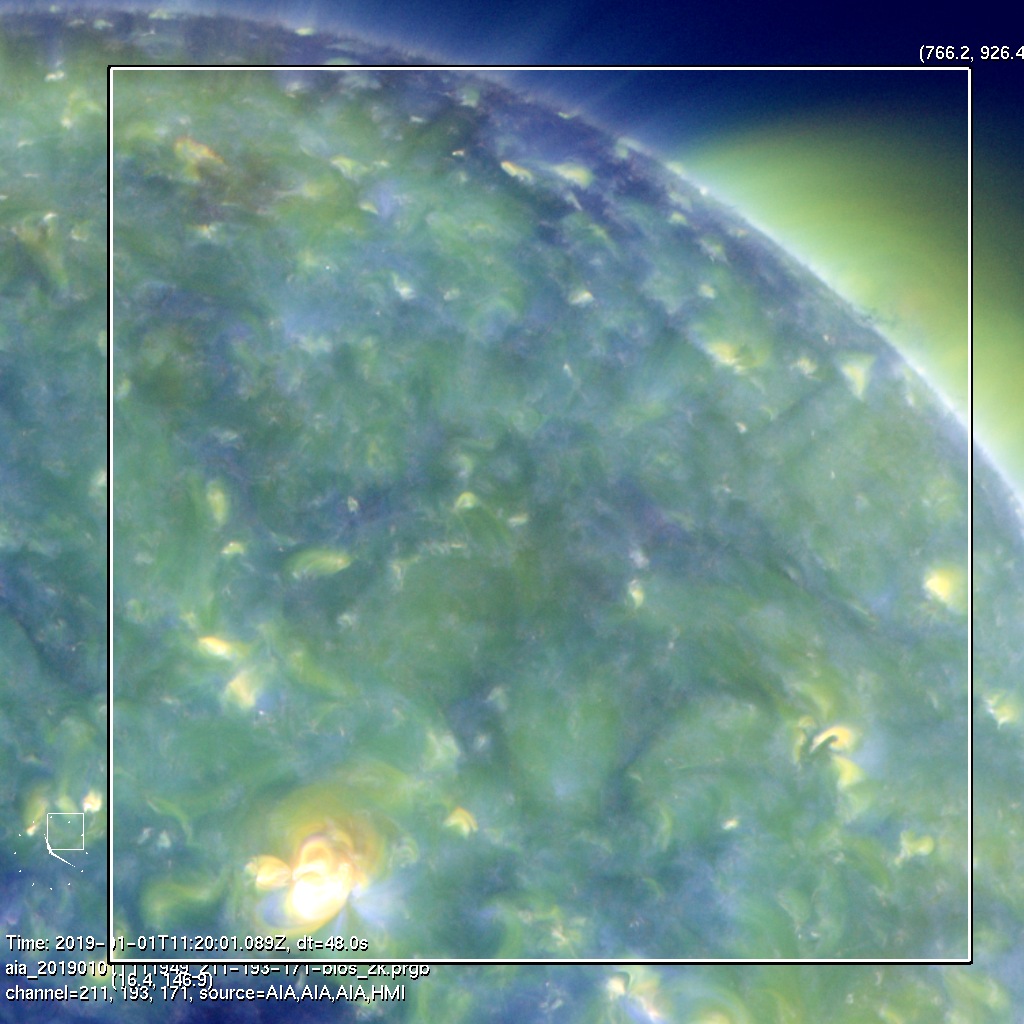
The northwestern quadrant of the Sun saw at least three minor eruptions that started within 1.5 minutes apart.
Rating:
3.0 (0=lowest, 5=highest)
Num Ratings:1
Detected by halocme, Submitted at 2019-01-05T21:19:05
2018-12-31T22:00:09 --> 2019-01-01T00:00:09
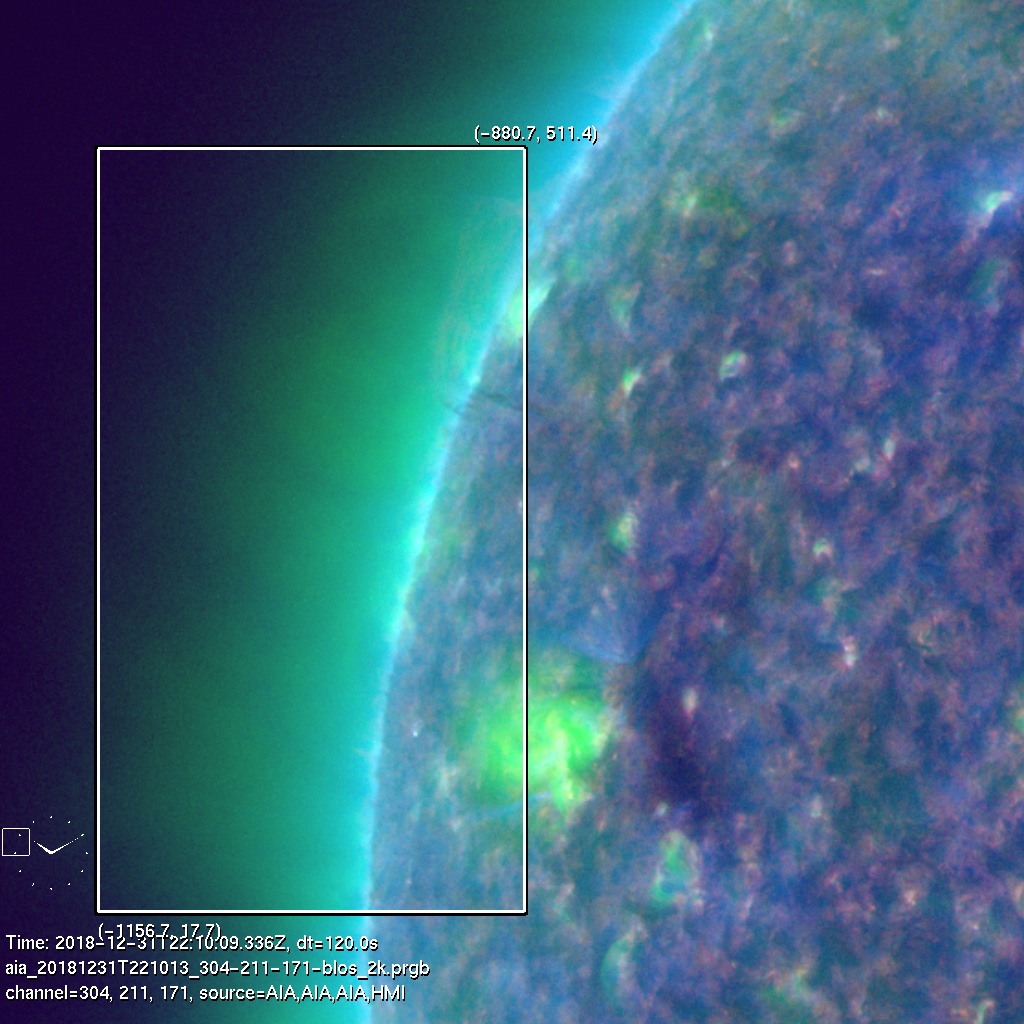
This is extremely hard to see in intensity images, but a quite large volume of the corona is seen to move out. The eruptive prominence around the northern leg may contribute the whole eruption.
Rating:
3.0 (0=lowest, 5=highest)
Num Ratings:1
Detected by halocme, Submitted at 2019-01-05T21:10:49
2018-12-31T19:00:09 --> 2018-12-31T20:30:09
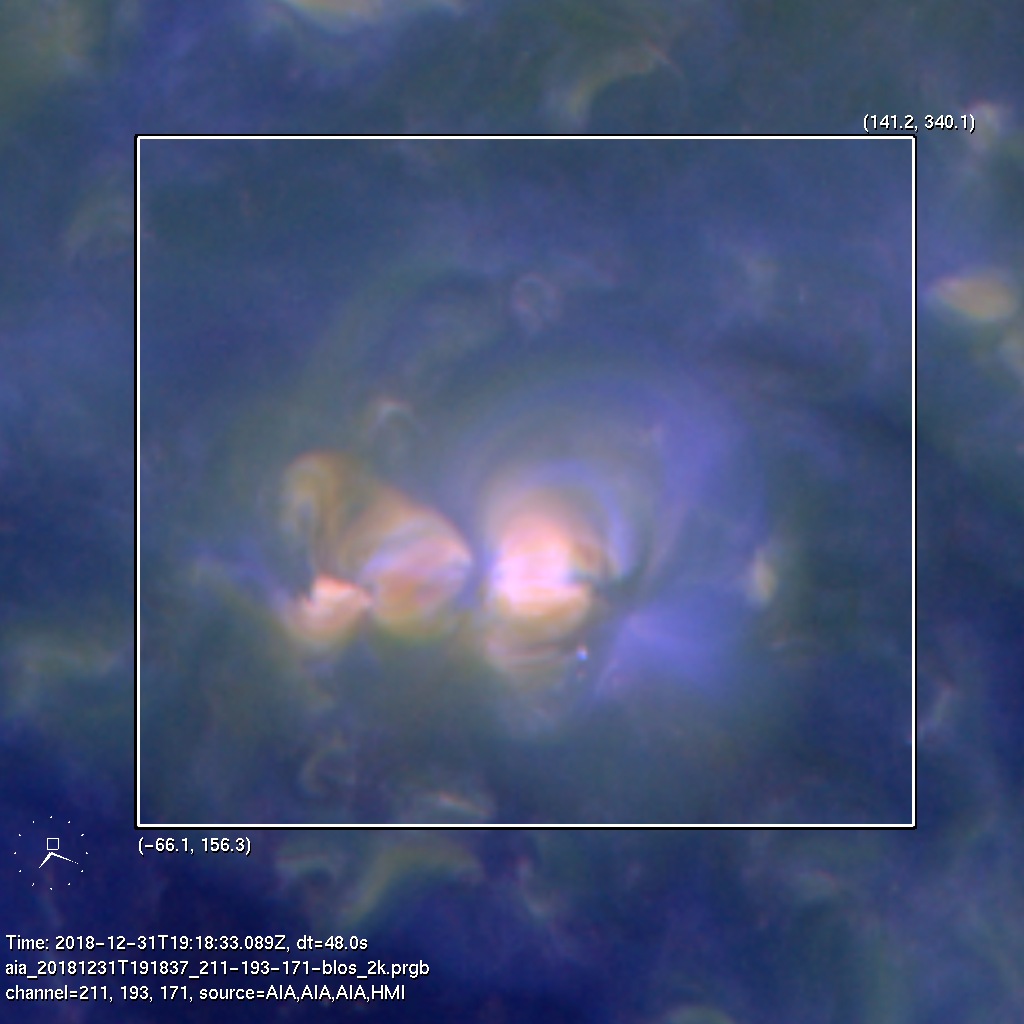
During the growing phase of AR 12732, an eruption occurred in the eastern bipole, which appeared to trigger another in the western bipole. These eruptions ignited a weak wave propagating northward beyond the active region.
Rating:
3.0 (0=lowest, 5=highest)
Num Ratings:1
Detected by halocme, Submitted at 2019-01-05T21:04:37
2018-12-30T18:00:09 --> 2018-12-30T19:20:09
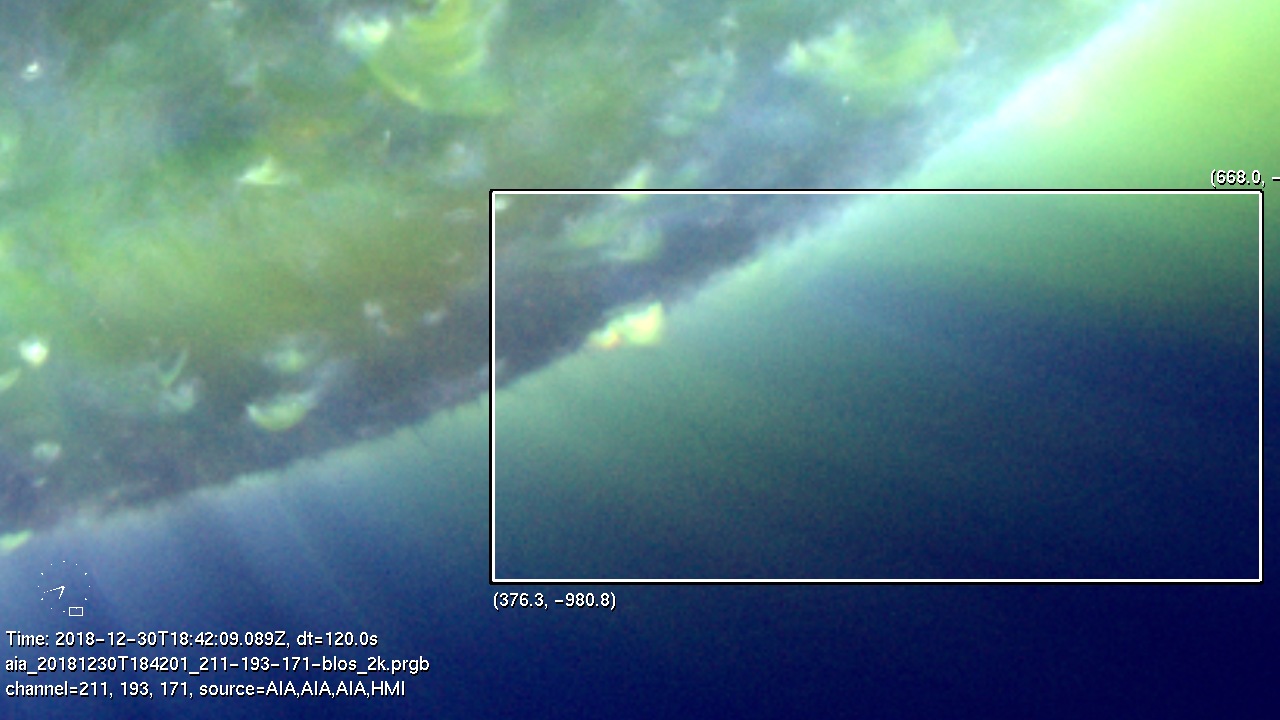
This jet may have been aligned with local open field lines that were bending toward the equator.
Rating:
3.0 (0=lowest, 5=highest)
Num Ratings:1
Detected by halocme, Submitted at 2019-01-05T20:48:36
2018-12-30T07:10:13 --> 2018-12-30T08:10:13
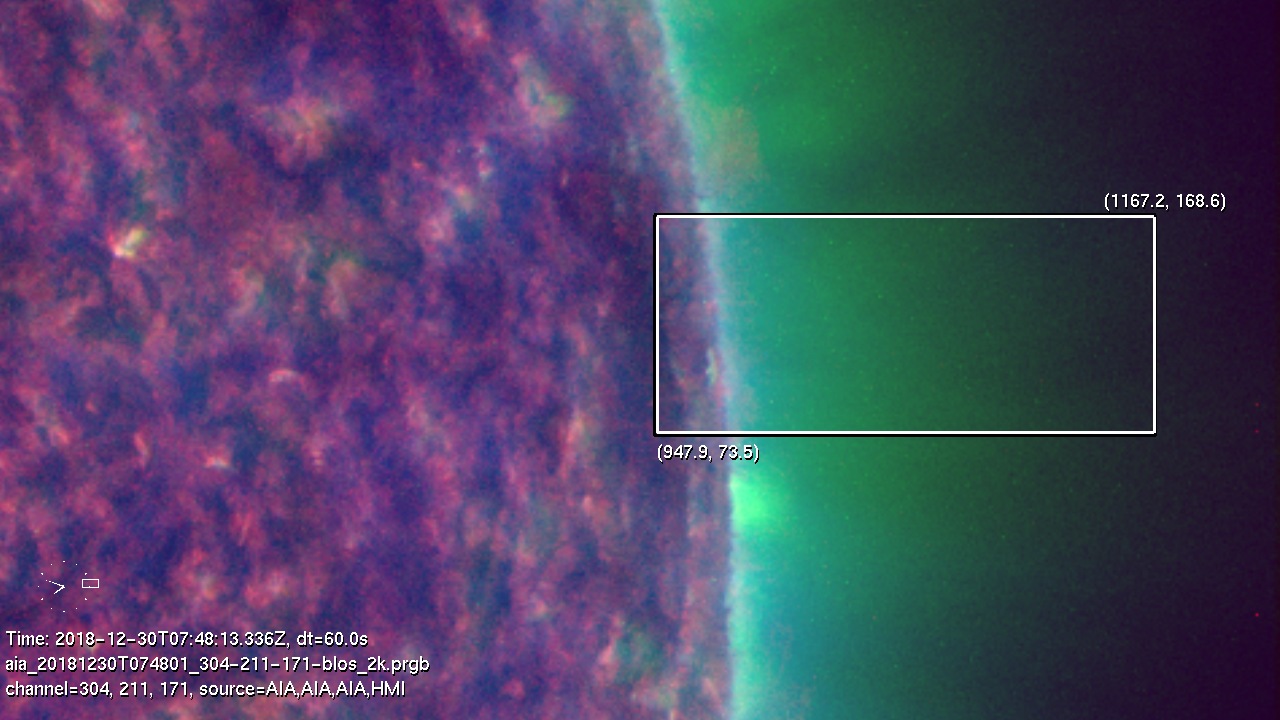
Just one of those jets. An ejection of the chromospheric material may be traced to a relatively large distance.
Rating:
3.0 (0=lowest, 5=highest)
Num Ratings:1
Detected by halocme, Submitted at 2019-01-04T08:47:38
2018-12-24T05:50:25 --> 2018-12-24T07:10:25
An eruption from a compact region ~40 degrees behind the east limb. The region decayed before it rotated on to the visible side, but it was probably spotless even at the time of the eruption.

Rating:
3.0 (0=lowest, 5=highest)
Num Ratings:1
Detected by halocme, Submitted at 2019-01-04T08:37:07
2018-12-29T11:00:09 --> 2018-12-29T20:00:09
Repeat of the slow and large-scale eruption seen in 171 A images. These events have no presence in LASCO data.
Rating:
3.0 (0=lowest, 5=highest)
Num Ratings:1
Detected by halocme, Submitted at 2019-01-04T01:49:56
2018-12-29T00:00:09 --> 2018-12-29T07:00:09
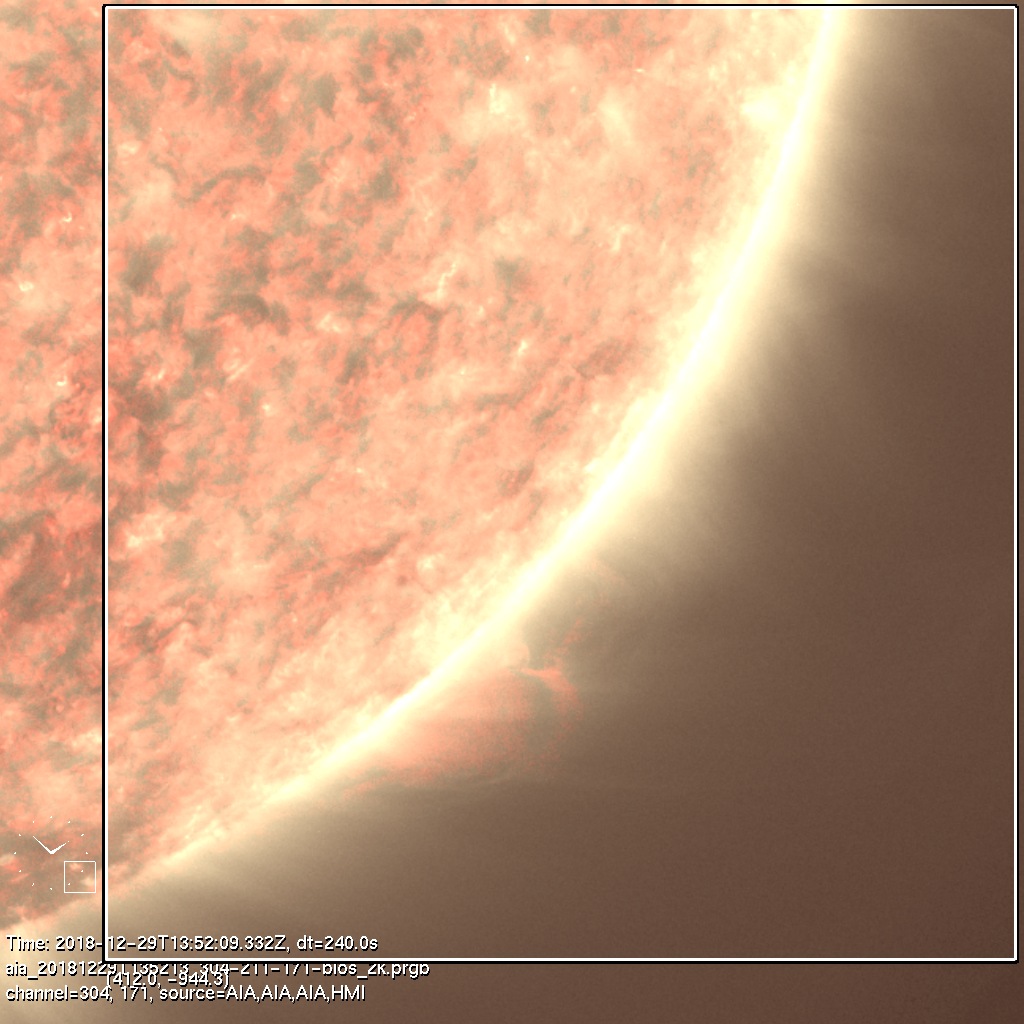
A slow and large-scale eruption primarily detected in 171 A images. This phenomenon seems to be more often seen during a solar minimum. This one seems to be related with prominence activity at the legs of the eruptive strcuture.

Rating:
3.0 (0=lowest, 5=highest)
Num Ratings:1
Detected by halocme, Submitted at 2019-01-04T00:41:11
2018-12-28T06:30:01 --> 2018-12-28T07:30:01
This is so diffuse that difference images are needed to be sure about its occurrence. The front edge is not well defined.

Rating:
3.0 (0=lowest, 5=highest)
Num Ratings:1
Detected by halocme, Submitted at 2019-01-04T00:26:44
2018-12-27T07:35:25 --> 2018-12-27T08:45:25
In this 70 minute movie, multiple jets are seen in the north polar region, suggesting dynamic small-scale magnetic rearrangement.
